01 / The place
Above the passage through Nithsdale
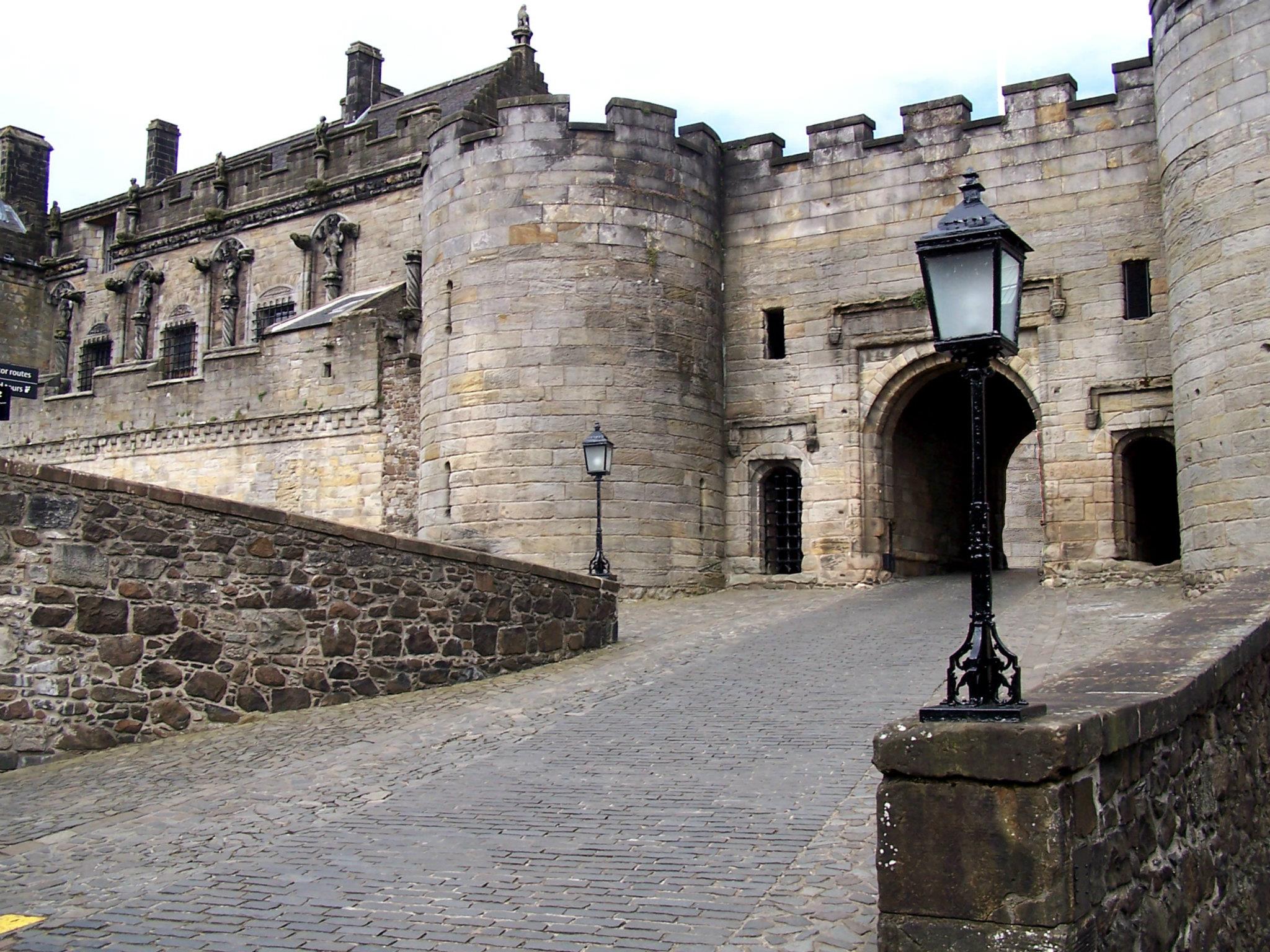
The castle occupies the edge of a plateau overlooking the Nith valley. Its position helps explain the ambitions of those who held it: a stronghold here belonged to a landscape of movement, settlement and routes through southern Scotland.
The town’s ancient name and its later castle need careful separation. Martin Allen’s study of Sanquhar’s historical geography discusses an earthwork north of the town, interpreted as an earlier fort as well as the standing ruin. An old place-name alone cannot date the masonry in front of us. The present castle developed through several building campaigns, with the national archaeological record placing its southern tower in the late fourteenth century.
02 / Documented history
Reading the castle in layers
The surviving complex was repeatedly enlarged. Historic Environment Scotland’s archaeological record describes a late-fourteenth-century southern tower, curtain walls and further tower work around 1400–1450, followed by sixteenth- and seventeenth-century additions. A courtyard castle emerged from those successive changes.
Crichton Peel, the alternative name, recalls the Crichton family’s association with Sanquhar. James Brown’s 1891 history traces the castle’s ownership from the Edgars to the Crichtons, and then to the Douglases in the seventeenth century. Brown attributes its decline to the removal of its lead roof after the family’s move to Drumlanrig.
Later generations returned with a different purpose. Brown describes nineteenth-century excavation revealing kitchens, a bakery and the well. The national record also preserves Robert Weir Schultz’s survey of December 1895 for the third Marquess of Bute. The ruin became something to investigate, record and try to understand.
03 / Lives behind the walls
A bucket at the bottom of the well
Brown’s excavation account offers glimpses of ordinary life: pottery, tobacco pipes, a child’s toy boat and the old bucket used to draw water. The well, he writes, lay within the round tower and reached forty-two feet down.
There was already a story of treasure hidden at the castle. When a workman uncovered the bucket, Brown says he mistook it for the long-promised pot of gold and called to be pulled up. The contents proved to be broken stones. It is a small, wonderfully human episode: the expectation of a story shaping the first reading of an unfamiliar object.
Sources for this section · 1
04 / Recorded folklore
Two presences in the ruined castle
By 1911, J. Maxwell Wood recorded two distinct Sanquhar Castle ghost traditions in his collection of south-west Scottish folklore. One concerned a servant of Sir Thomas Kirkpatrick of Closeburn, said to have suffered innocently at the hands of the sixth Lord Crichton. This presence was heard rather than seen: the unsettling sound of chains within the castle walls.
The other was a Lady in White. Wood describes her as a young woman wronged and murdered by a Lord of Sanquhar, her rare appearance an omen of grief or misfortune for the Crichtons. His brief account leaves her unnamed.
These are published traditions, preserved more than a century ago. Wood gives us a clear record of the stories circulating in his time, though no dated witness statements or evidence establishing the alleged killings.
05 / Following the story
Marion and John Wilson: tracing the names
Our older castle entry gives the White Lady a possible name: Marion of Dalpeddar, said to have disappeared in 1580. It also repeats a report of a woman’s skeleton found within a wall during excavations in 1875–76. The second ghost is called John Wilson and said to have been hanged by a Crichton lord.
Those details add a powerful sense of a particular life lost. They also go beyond Wood’s account. The sources linked here have not established the origin of the names or a contemporary record of the reported skeleton. We retain them as versions preserved in our older entry, with the identities and circumstances unresolved. An excavation record, an early newspaper report or a family document could yet help trace how these versions developed.
06 / Plan a visit
A ruin with a future still being discussed
Sanquhar’s 2026–2036 Local Place Plan describes the castle as privately owned and in need of substantial investment to stabilise it and make it safe for visitors. It records a condition survey funded by Historic Environment Scotland in early 2024 and an ambition to secure a sustainable future for the site.
That ambition should not be mistaken for an open visitor attraction. Interior access and a regular opening arrangement were not confirmed for this guide. Check current local notices and any arrangements with the owner before travelling specifically to enter the ruin. View it only from lawful, open approaches; respect fences and closed areas, and keep clear of unstable masonry.
The castle’s wider story rewards attention even from a distance: the changing outline of the building, its position above the valley and the long afterlife of the people imagined within its walls. Visitor information reviewed 15 September 2026.
Sources for this section · 1
Prepared for Scottish Paranormal / Haunted Scotland.
Sources and visitor information reviewed 15 September 2026.