01 / The documented castle
A merchant’s ambition above an older tower
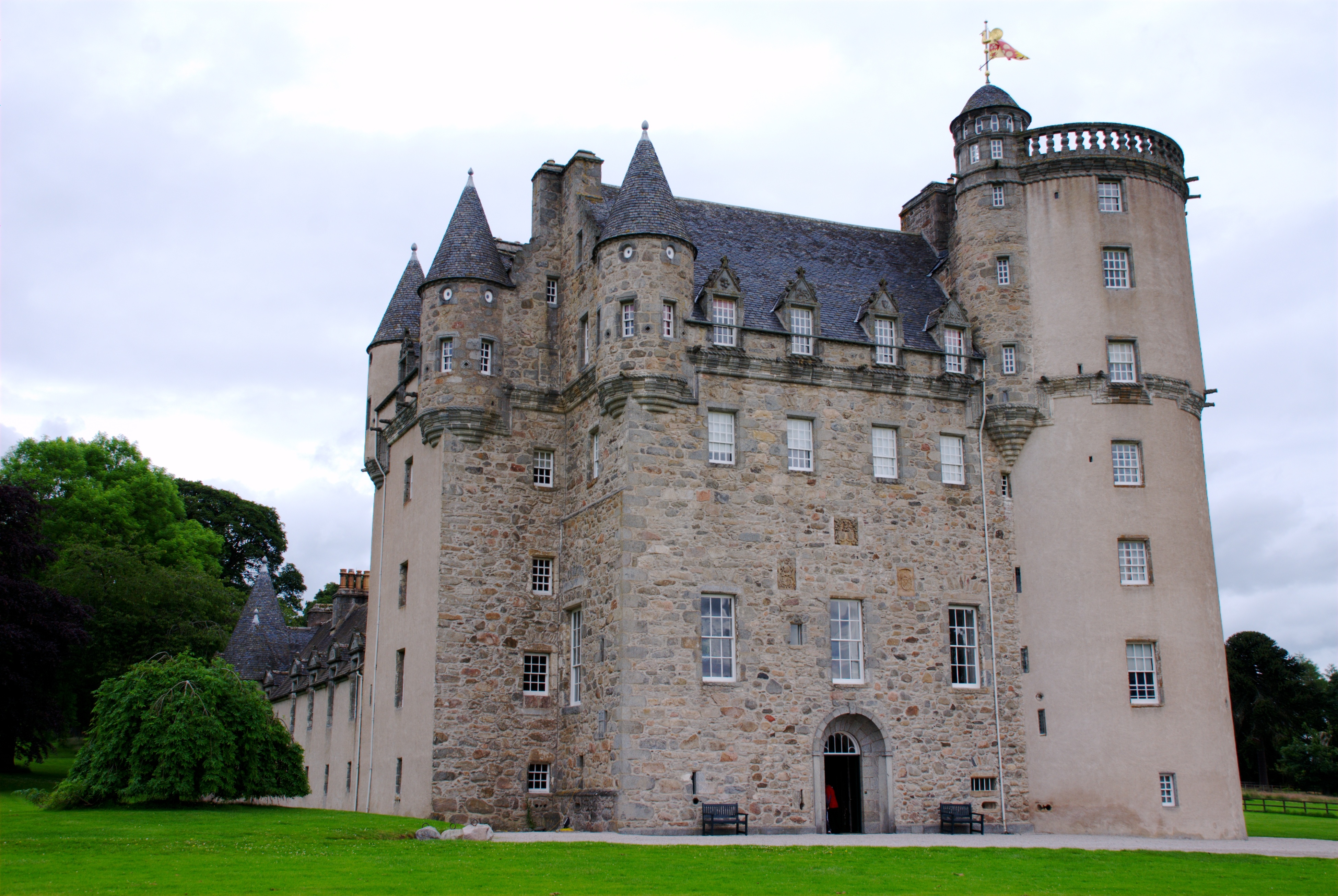
The National Trust for Scotland’s current history dates the Mortimers’ original castle to about 1575–95. Its upper storey was probably much simpler than today’s skyline. The carved band around the tower marks the join between older fabric below and the later upper levels.
William Forbes bought Craigievar in 1610. Wealth accumulated through Baltic trade allowed him to transform its upper levels, adding the turrets and elevated viewing platform. The Trust dates completion to around 1626. What looks like one confident design is the carefully joined work of two periods.
The Forbes family remained here for more than three centuries before the castle entered the Trust’s care in the 1960s. Its long use as a home is central to understanding the rooms beyond the elaborate exterior.
Sources for this section · 1
02 / Inside the tower
Look up, and let the daylight lead
Historic Environment Scotland records an L-shaped tower rising through five to seven storeys, with a vaulted ground floor and a great hall above. The hall retains its original screens passage, which divided the entrance end from the principal room. Elaborate plaster ceilings occur through much of the building. Its Category A designation recognises this exceptional surviving fabric.
The Trust identifies biblical and classical figures among the ceiling decoration, alongside cherubs, heraldry and geometric designs. One small curiosity repays attention: a reversed letter D in David also appears at Kellie and Glamis, where the craftspeople reused their moulds. A repeated detail connects three grand houses through the hands that decorated them.
The Trust says no artificial light is used in the castle. Daylight therefore forms part of the experience, changing how the interiors are seen as the weather and time of day shift. Allow the rooms their own pace on the guided tour.
03 / Colour and conservation
Why Craigievar is pink
The pink belongs to a later chapter than William Forbes’s enlargement. In the 1820s, Sir John Forbes faced a building suffering from leaking roofs and damaged interiors. Architect John Smith recommended urgent repairs and a new finish that would echo the colour of local granite. Pigments were added to the lime coating, replacing the earlier pale appearance.
Harling is the textured protective coat over the masonry; limewash supplies the finish renewed by conservators. Keeping those layers sound helps protect the rooms and plasterwork inside. The colour may catch the eye first, but the surface has a practical job in an exposed hillside setting.
The Trust’s 18-month Pink Again project culminated in reopening on 31 May 2024. Repairs to harling and roof details improved the way rain and snow leave the building, followed by more than 13,000 litres of limewash. Craigievar’s fresh appearance reflects sustained work to keep water out of a vulnerable historic house.
04 / Reading the grounds
The courtyard that disappeared from the view
The tower once stood inside a walled enclosure called a barmkin. A surviving western section and corner tower hint at a much busier setting, with buildings gathered around the castle. Today’s open lawn can make it easy to miss how firmly the house was once enclosed at ground level.
In her account for the Trust, surveyor Annie Robertson describes archaeological evidence of structures within that courtyard. Post holes to the south indicate a timber building; another structure occupied the gap on the north side. The exact activities carried out here are not recorded, so individual workshops or household routines cannot be confidently assigned.
Flagstone paving now traces lost stretches of the wall above its buried foundations. Follow that outline and the castle’s proportions begin to change in your imagination. The turrets still rise overhead, but beneath them appears a working enclosure, with its own entrances, obstructions and daily life.
Sources for this section · 1
05 / The Blue Room tradition
A forbidden meeting above the ground
A 2017 retelling by the National Trust for Scotland Foundation USA sets Craigievar’s best-known dramatic story against the rivalry of the Forbes and Gordon families. A young Gordon loves the daughter of Red Sir John Forbes and climbs to her Blue Bedroom. Instead of a private meeting, he encounters her father.
In that version, Sir John attacks him with a sword and the young man falls from the window to his death. The account then links unexplained footsteps and a sense of presence to the story, suggesting either the Gordon lover or Sir John as the figure believed to remain.
The Foundation presents a tragic romance, supplying no dated statement from an identified witness or contemporary record establishing the death. The room and family names give the tale a compelling setting; the fatal encounter and identities attached to later experiences remain part of its telling.
Sources for this section · 1
06 / Another reported presence
The musician and the well
The Trust also preserves a quieter ghost tradition: a fiddler who fell into the castle well and drowned. Its Ghosts of the Trust collection connects him with music heard within the walls. The story leaves a different impression from the confrontation in the Blue Room: a remembered musician, an accident and a sound that seems to outlast its player.
The published summary offers no name, date of death, witness interview or recording. It describes a tradition rather than an encounter whose conditions can be examined. A visitor who hears an unexpected sound can keep both possibilities in mind: the story associated with this place, and the need to establish where that particular sound came from.
Sources for this section · 1
07 / Planning a visit
Leave time for the next available tour
Craigievar is near Alford, at AB33 8JF. Follow the signed main entrance from the A980; the Trust warns that the south drive is unavailable to vehicles. Castle entry is by guided tour, allocated first come, first served, with no advance booking and a maximum of ten people. Busy days can mean a wait or fully allocated tours.
Checked on 15 September 2026, the published schedule lists Friday–Monday, 10.30am–4pm, through 28 September, then weekends, 11am–3pm, from 29 September to 25 October. The final time is the last tour’s departure, when the shop and kiosk also close. Check the official page again before travelling; dates and arrangements can change.
Stone entrance steps and steep spiral stairs limit interior access. The grounds around the castle are accessible, but woodland paths are unsurfaced, sometimes steep and potentially slippery. Contact the property about individual needs and priority drop-off. Grounds open daily from dawn to dusk; follow local trail closures, especially after strong winds. An exterior visit and a full castle tour offer different experiences, so plan for the one you want.
Sources for this section · 1
Prepared for Scottish Paranormal / Haunted Scotland.
Sources and visitor information reviewed 15 September 2026.