01 / The documented beginning
Permission to build a stronghold
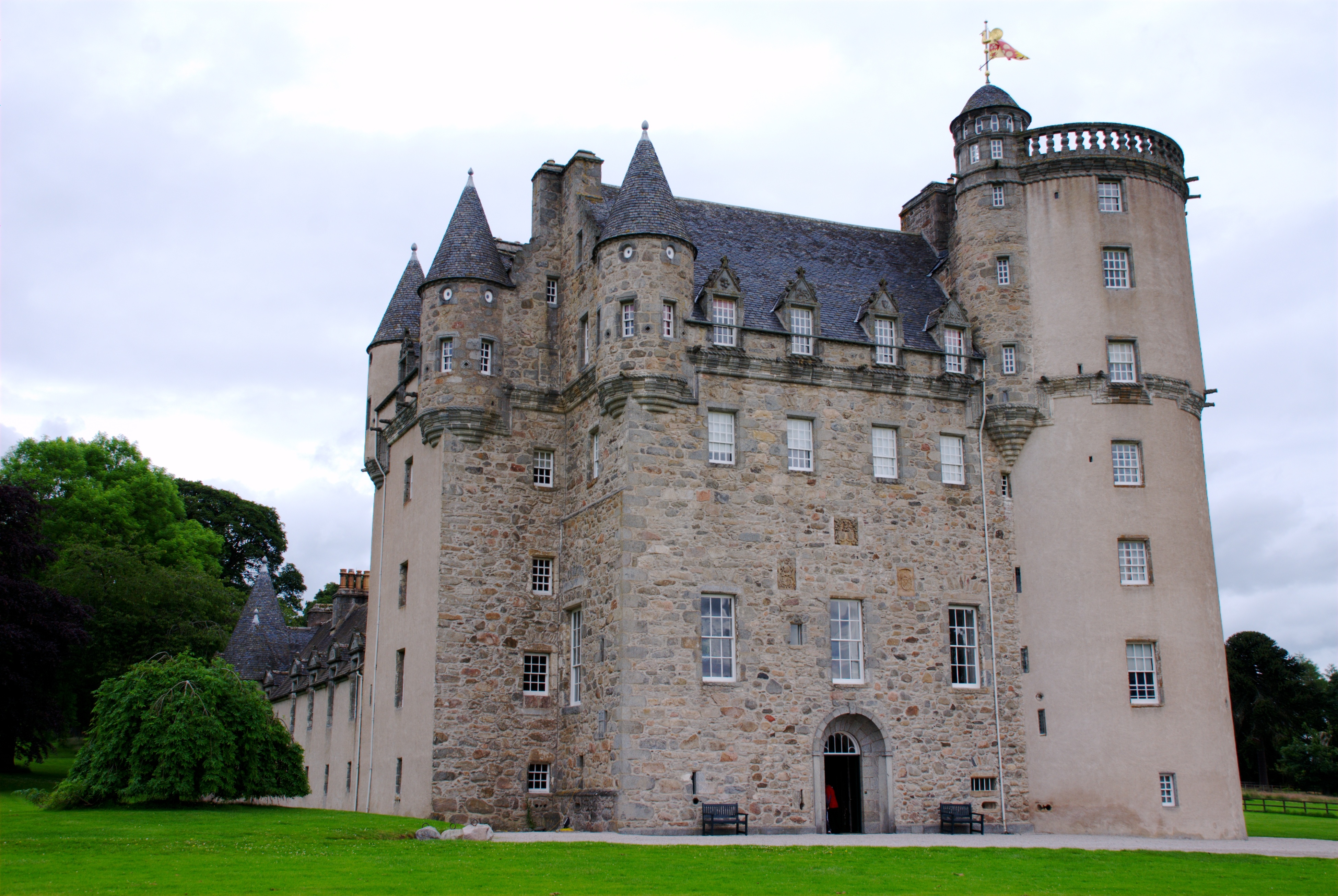
Guthrie Castle stands in the village of Guthrie, east of Forfar. Its familiar name is also the name of the family long associated with the estate. The tower’s origins have a particularly useful documentary anchor: a royal licence preserved among the Guthrie family papers at the National Records of Scotland.
Dated 14 September 1468, the licence authorised David Guthrie to build a tower or fortalice, a fortified residence, with walls, ditches and an iron door. It also permitted defences above, including openings through which defenders could attack someone at the foot of the walls. This gives substance to the castle’s defensive beginnings, without requiring every feature visible today to be medieval.
The catalogue also records a 1465 grant of the Guthrie lands to David, described as treasurer. We have read the archival descriptions rather than the original sealed documents. Their dates establish a firmer starting point than the rounded foundation dates found in some modern visitor accounts.
02 / Reading the building
An old tower inside a changing house
The medieval core occupies the north-west corner of the larger house. Architectural investigators recorded a tower about 40 feet by 31 feet, with walls between five and eight feet thick. Those measurements differ from the fourteen-foot walls stated in our old article. The surviving building offers a better guide than the more dramatic figure.
Historic Environment Scotland describes three storeys, a vaulted hall at second-floor level and a projecting stair tower. Its listing records a mansion attached in 1818, followed by David Bryce’s remodelling and extension in 1848. The attic storey and battlements belong to that later work.
A 1975 Ordnance Survey visit found the keep well preserved, while identifying most inserted windows and the roof features above the projecting parapet as modern. The result is a building with two closely woven histories: a defensive tower adapted into a comfortable country house, and a nineteenth-century vision of what a Scottish castle should look like.
03 / The estate landscape
An iron door in a garden wall
The gardens carry the same mixture of old fabric and later design. Their separate listing records horseshoe-shaped enclosing walls, a gateway stone marked W.G. 1614, a Gothic garden house and rebuilding around 1818. The date stone survives within a garden that continued to change.
The castle’s yett, its iron entrance gate, was eventually moved to a garden archway. Historic Environment Scotland’s landscape inventory places the wild garden’s planting in 1925 under Colonel Ivan Guthrie. Its account also describes the Lunan Water widened into an ornamental lake, with the approach arranged to bring the castle into view across the water.
These details help explain the setting in older estate photographs and a designed landscape with its own history. Today these gardens form part of the private residence.
04 / An unexpected piece of engineering
The gateway that carried trains
The West Gate looks like a small fortified entrance, with octagonal towers and a battlemented top. Its practical purpose was surprisingly modern: the railway crossed over the castle drive. Historic Environment Scotland dates this Tudor Gothic gateway to about 1838 and lists it separately from the castle.
The National Transport Trust explains that opposition from the estate’s owners was resolved by giving the railway bridge the appearance of a medieval gateway. The design allowed a new transport route to pass through the landscape while preserving a grand entrance below.
Our February 2020 photograph makes the arrangement easy to picture. Follow the top of the arch between the towers: that is the level at which the railway crossed. The visible gateway should not be mistaken for a surviving entrance from the fifteenth-century castle.
Sources for this section · 2

05 / The ghost tradition
A lady with the keys
The familiar story places a bishop of St Andrews at Guthrie in 1620. In our original article, the ghost of a former Lady Guthrie visits him to make sure he is comfortable. Her later appearances are described in the same spirit: someone still keeping an eye on the household after death.
Keith Coleman’s Angus Folklore account, published in 2015, gives a more detailed version. A black-clad woman enters the West Bedroom with keys at her waist and sits on the bed. Coleman preserves two possible identities: a servant who followed a Lady Guthrie around to lock up, or a former Lady Guthrie herself.
The two versions share a concern with the running of the house, but they do not identify the same person. Neither source supplies a contemporary statement from the bishop or a document naming the woman. The year 1620 belongs to the story as handed down; it should not be mistaken for the date of an eyewitness record we have inspected.
That domestic character gives the tradition its particular appeal. The unsettling visitor is remembered for watchfulness and care, rather than a threat to those who see her.
06 / Later reported experiences
What the later accounts actually tell us
The 2012 Scottish Paranormal entry also mentions a Guthrie family member who reportedly saw the figure as a little girl, followed by unspecified experiences after the Peña family arrived in September 1984. Electric Scotland carries closely matching wording. These passages preserve a claim, but repeating it on two websites does not establish two independently documented encounters.
No name, precise date, description of the circumstances or original statement accompanies those later experiences in the material reviewed. The phrase “last seen” in an old article therefore cannot establish the most recent appearance today. Further testimony could add something valuable, particularly if it preserves what was actually observed before attaching an identity to it.
This guide makes no claim of an HSI investigation, recording or personal encounter at Guthrie. The archive material used here is a short account of the castle and its reputation. It leaves a tradition worth tracing, with the limits of the surviving description visible.
07 / Current access
A private home today
Guthrie Castle’s official website now identifies it as the private residence of Dan Peña and his family. It states that the castle does not receive tourists or the general public. Access is by invitation through its private business-seminar programme.
This replaces the practical advice in our 2012 entry, which described a hotel and a bookable Ghost Suite. Older wedding pages and accommodation references should not be used to plan a stay. The current estate site explicitly says that it is not a hotel, wedding venue or venue for hire.
For now, explore Guthrie through the linked records and photographs. Do not arrive expecting a castle tour, a ghost-room booking or access to the gardens. These arrangements were checked on 15 September 2026; consult the official estate site if its status changes before a future visit.
Prepared for Scottish Paranormal / Haunted Scotland.
Sources and visitor information reviewed 15 September 2026.