01 / The documented castle
The wall that outlived the stronghold
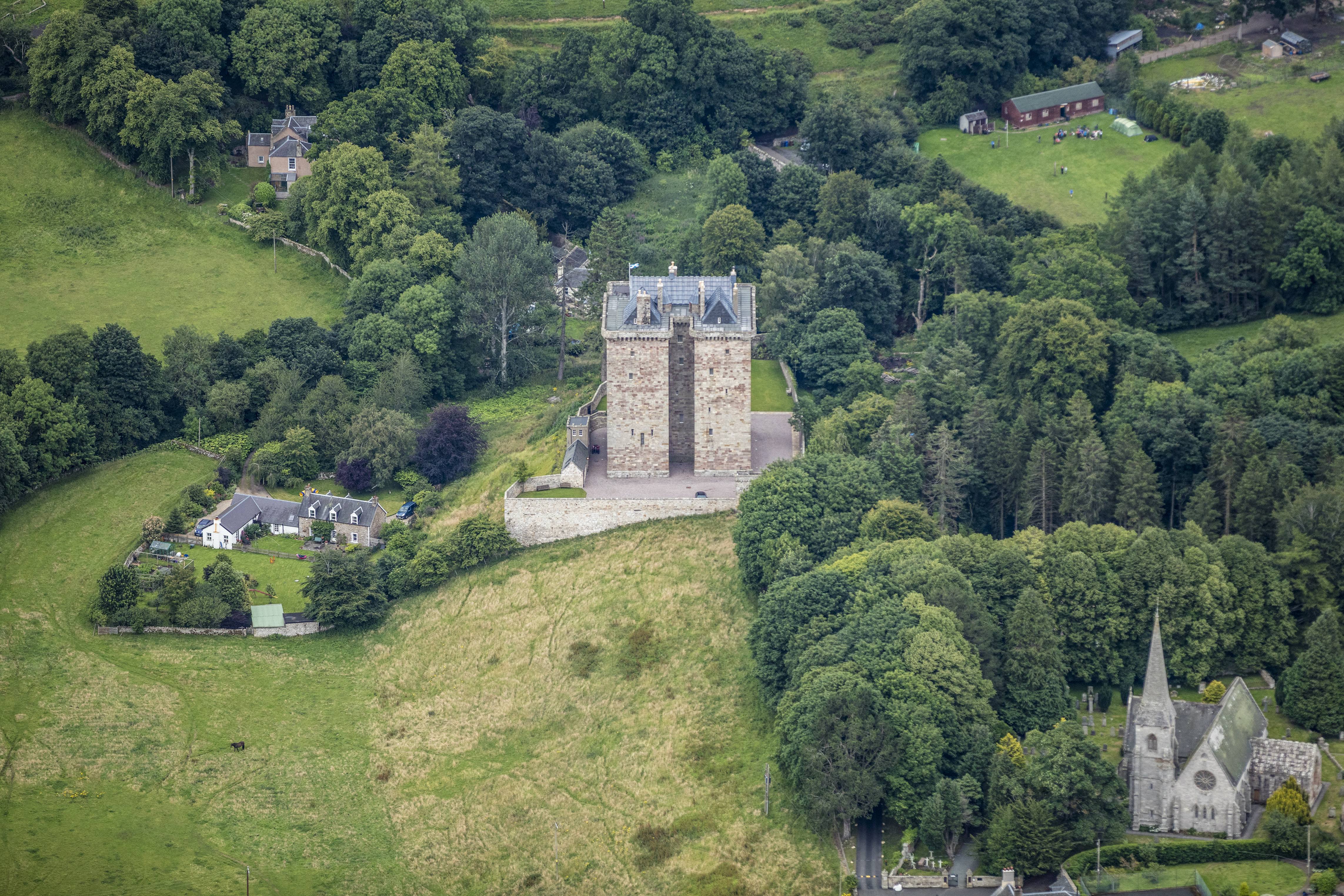
Airlie’s surviving medieval defences are usually dated to around 1432. The Ogilvys established themselves here in the fifteenth century, and the family connection continues through the present estate. Historic Environment Scotland lists the castle at Category B, recognising both the surviving defensive work and the later house attached to it.
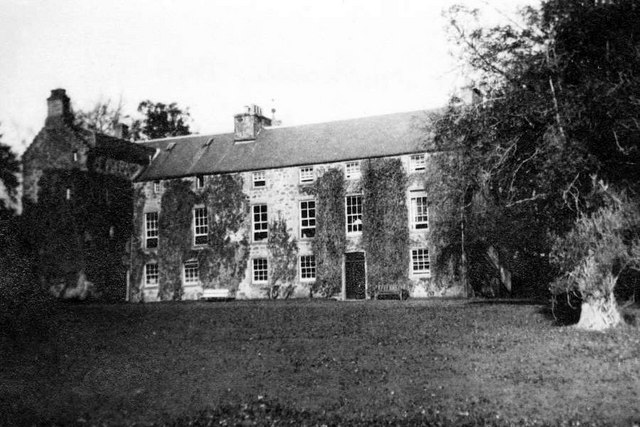
The east curtain wall is the clearest survivor: a formidable barrier approximately three metres thick, with an entrance near its northern end. The archaeological record describes a portcullis gateway and identifies the upper tower and stair turret as later work. The entire silhouette should therefore be read as a sequence of changes, rather than a single untouched medieval design.
A mansion added in the late eighteenth century gave Airlie a new domestic life. Its regular windows and classical proportions belong to a different age from the great defensive wall. The two stand together, making the building’s change from stronghold to country residence visible at a glance.
02 / Conflict in 1640
When loyalty brought fire to Airlie
The destruction of Airlie belongs to the struggles surrounding Charles I and the National Covenant. The Earl of Airlie supported the king; the Earl of Argyll acted against royalist opponents of the Covenant. In 1640, Airlie was sacked and burned. This historical episode sits at the heart of the castle’s best-known song.
Francis James Child’s nineteenth-century account describes the Earl of Airlie leaving Scotland, his son Lord Ogilvie holding the castle, and its eventual abandonment before Argyll’s force. It also places Lady Ogilvie’s reported displacement at Forthar, another family residence. That distinction matters: the dramatic confrontation at Airlie’s window belongs to the ballad’s telling, and should not be treated as a transcript of what happened here.
03 / The living song tradition
A house that people kept singing about
The Bonnie House o’ Airlie survives in several versions. A threatened home, a defiant woman and a demand for surrender give it an immediate human focus. Numbers, names and details change between texts, reminding us that a traditional song is carried by voices and memory as well as print.
Ewan MacColl’s notes for his 1964 Folkways recording explicitly distinguish the song’s Lady Ogilvie from the historical circumstances: she was not present during the burning of Airlie. The notes also challenge its large tally of children. His version came from the singing of Boston Dunn of Falkirk, preserving a named link in the song’s transmission.
Later versions sometimes invoke Prince Charlie, bringing Jacobite associations into a story rooted in 1640. Child noticed that chronological drift. Listen for the feeling of loss and resistance, while keeping the seventeenth-century destruction separate from the later cause the song could also evoke.
04 / An attributed personal account
Fear in the evening sunshine
Mabell, Countess of Airlie, described disturbing experiences in the Den in her memoir, Thatched with Gold, published in 1962. An excerpt reproduced by the Balintore Castle restoration blog recounts Princess Mary’s walk during a September 1921 stay. Near a bridge over the Melgum, she reportedly became intensely afraid and ran back. Lady Airlie says she learned of this later from Queen Mary; it is a relayed account.
The memoir also attributes a similar experience in the 1930s to Jock Colville. Lady Airlie’s own account describes her dog stopping on the path, her sudden terror and a scramble up the bank. She interpreted the feeling as an unseen evil and subsequently avoided that route.
These are remembered experiences preserved in a memoir, read here through a published excerpt. The fear deserves to be represented faithfully, while its cause remains unresolved. No visible figure is described in these episodes, and this guide does not assign them a ghost’s identity or connect them to a particular historical death.
05 / A wider family tradition
Which castle belongs to the drummer?
The Airlie name also carries one of Scotland’s famous death-omen traditions: a spectral drummer said to warn of a death in the Ogilvy family. Some modern travel pages attach it directly to Airlie Castle, but the principal castle in the published drummer story is Cortachy, another Ogilvy seat.
Martin Coventry’s account places the alleged killing of the drummer at Cortachy and preserves different explanations for it. It also recounts reports from other family-associated places. This is a tradition attached to a family across several locations, with varying versions of its origin. It offers useful wider context for Airlie, while the Den memoir remains the more specifically located account for this castle’s grounds.
06 / The landscape around the walls
Two rivers and a garden within a garden
Airlie stands where the River Isla and Melgam Water meet in deep gorges. The natural slopes helped defend the medieval site, while the later designed landscape brought woodland walks, formal planting and sheltered garden spaces into the same setting. Historic Environment Scotland includes the grounds in its national inventory of important gardens and designed landscapes.
The current Scotland’s Gardens Scheme description makes the contrast wonderfully tangible: an eighteenth-century walled garden with fruit, vegetables and flowers, divided by mature yew and box topiary. Within the castle walls, herbaceous borders, climbing wisteria and a large Kiftsgate rose soften the masonry.
Elsewhere, longer grass has allowed native orchids to return. The gorge is protected for its natural interest, including rare lichens and wildflowers. These living details are part of Airlie’s character, alongside its older associations and stories.
07 / Plan with the estate
Watch for the next garden opening
Airlie is a private estate, with access opportunities announced by the estate and Scotland’s Gardens Scheme. The advertised 2026 garden afternoon was Sunday 30 August, from 2pm to 6pm. That date has passed; the scheme now lists it under past openings. No later opening was listed when this guide was checked.
For a future visit, check those official pages or contact the estate office before travelling. A garden event does not automatically include entry to the castle’s rooms. Ask about the available route, steps, surfaces and facilities if these will affect your visit, particularly where the grounds descend towards the river.
Airlie Estates also advertises holiday accommodation and an arts residency in converted stables. Those arrangements have their own terms and should be booked or confirmed directly. The photograph here dates from July 2021. Access information checked 15 September 2026.
Prepared for Scottish Paranormal / Haunted Scotland.
Sources and visitor information reviewed 15 September 2026.