01 / The documented building
A modern castle with an older face
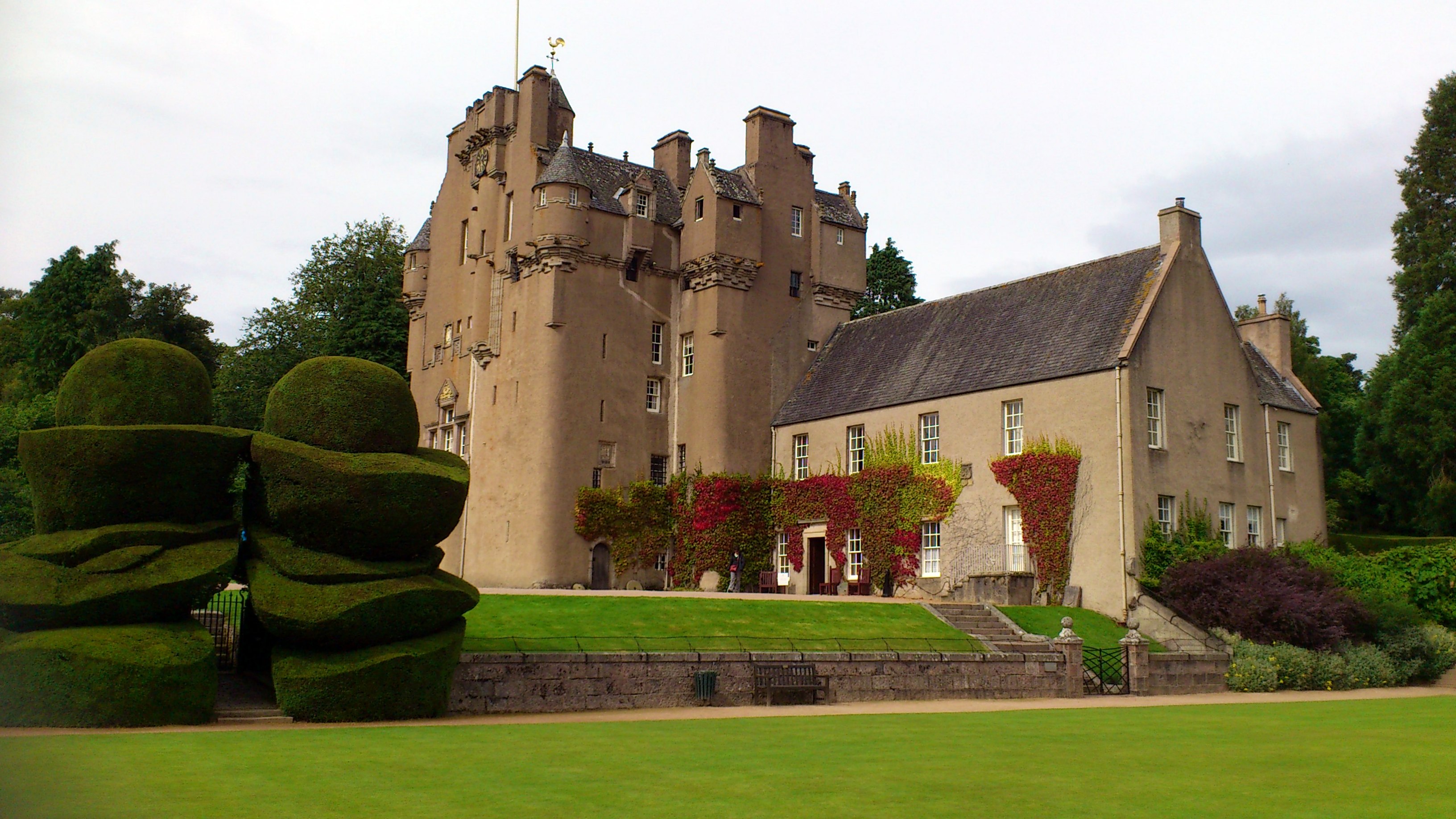
Carbisdale was commissioned for Mary Caroline, Dowager Duchess of Sutherland, on the site of the earlier Culrain Lodge. Historic Environment Scotland describes a large Baronial mansion, built in grey stone with contrasting sandstone details, and tentatively attributes the initial design to John Robertson in 1907. Its square clock tower and projecting turrets dominate the river-facing skyline.
The Dictionary of Scottish Architects records construction across 1906–1917, including work by Weatherley and Jones in 1910–1911. An account published in Alexander Polson’s Easter Ross in 1914 already describes the castle as newly completed. These records point to a building developed in stages; a single completion date needs care.
Polson described reception rooms decorated in Tudor, Jacobean and Queen Anne styles, a gallery of paintings and sculpture, and a richly carved oak staircase. This was a house designed for display, comfort and a commanding view. Its castle-like outline was part of that ambition.
02 / Family history and tradition
The clock that withheld the time
Carbisdale’s best-known nickname grew around a bitter family dispute. After the 3rd Duke of Sutherland died in 1892, his children challenged the inheritance of his second wife, Mary Caroline. A settlement eventually provided her with the means to establish a new Highland home. Greg Stewart’s Scottish Paranormal article follows this background into the tradition of the Castle of Spite.
The story gives the clock tower a pointed role. Only three sides carry clock faces; the blank side facing Sutherland is said to express the Duchess’s refusal to give her estranged relatives the time of day. It is a memorable interpretation of the building, passed on as local tradition. The nickname is also recorded by the Dictionary of Scottish Architects, although that does not establish the Duchess’s exact intentions.
03 / A house shared with the world
From royal refuge to youth hostel
Colonel Theodore Salvesen bought Carbisdale in 1933. His Norwegian connections gave the castle an unexpected wartime role: refuge for King Haakon VII and Crown Prince Olav during Norway’s occupation. McTear’s account of the castle’s art collection records this history alongside the later gift by Salvesen’s son, Captain Harold, to the Scottish Youth Hostels Association.
The hostel opened on 2 June 1945. For decades, travellers could share a building furnished on a scale far beyond an ordinary hostel. Paintings and sculpture became part of the experience of arriving, finding a bed and meeting people from across the world. McTear’s later sold works on behalf of the association, documenting the collection’s dispersal.
The ending was more complicated than a simple change of use. A statement from SYHA in the local community council’s spring 2012 newsletter described damage from the severe winter of 2010–2011, followed by further serious problems, increasingly complex repairs and rising costs. Carbisdale remained closed while that work was under consideration.
04 / History beneath the legend
Montrose’s last battle
The Battle of Carbisdale took place on 27 April 1650, more than two centuries before the present castle. Montrose’s Royalists were defeated by Covenanter forces under Archibald Strachan. Historic Environment Scotland places the likely fighting on the floodplain near Culrain, with retreat into woodland and deaths in the river. The battlefield includes the rocky height on which the castle later stood.
A familiar ghost story brings that earlier conflict indoors: an agitated man carrying a sword, encountered in a linking corridor. A traveller’s diary dated 13 June 2000, preserved in The Alpine Echo, repeats the account as part of the castle’s existing history. It gives neither the witness’s name nor the date of the encounter.
The figure’s clothing has been interpreted as belonging to the battle’s period. That association remains an interpretation of the reported appearance. The castle did not stand here during Montrose’s campaign, and the surviving account does not identify a particular soldier.
05 / Accounts from the hostel years
Restless rooms and unseen musicians
Scottish Paranormal’s 2012 entry preserves stories associated with an old nursery or schoolroom, remembered as the spook room. These include figures moving around beds, children’s voices and crying, unexplained water falling on occupants, and beds reportedly found turned around. The article also mentions the sounds of a piper and organist associated with the former ballroom.
The entry groups these experiences together without individual dates, witness statements or descriptions of the conditions. They belong in the castle’s reported history, while the circumstances remain difficult to reconstruct. The nursery label does not establish a child’s death there, and unusual sounds do not identify an unseen musician.
No Scottish Paranormal investigation record or completed audio analysis is being claimed for these accounts. Original witness notes would help establish who experienced what, and what they checked.
Sources for this section · 1
06 / The grounds and staircase
A woman beside the gorse
One older story supplies a name. George Murray, described as a garden employee, reportedly saw a white-clad woman beside a whin bush: the Scots name for gorse. She vanished, and when he approached the spot he found no explanation. The retelling says Murray saw her again that summer and that others also encountered her. It supplies no year or surviving statement from Murray himself.
Later versions extend the white lady’s story into the house. Greg Stewart’s 2023 article calls the staircase figure Betty and also relates a hooded gardener searching for a drowned daughter. Those identities and relationships are traditions attached to the reported figures; no supporting family or death record is supplied.
The gardener in that later legend should not automatically be identified as George Murray. Nor does the shared white clothing establish that every account concerns the same apparition. Keeping the garden encounter, staircase tradition and bereaved gardener distinct preserves what each story actually says.
07 / A living reputation
How the stories travelled
Al Baal’s 2000 diary offers a small but revealing glimpse of hostel life. After a night of vivid dreams, a roommate suggested he read the castle’s history. Baal then reproduced the garden apparition and corridor soldier stories. His own experience is described as dreaming; the ghost accounts are material he read afterwards. That distinction matters when following how a place acquires its reputation.
Carbisdale continues to attract paranormal media. In March 2026, Swedish broadcaster TV4 announced the castle as the setting for Spökjakt – Inlåsta, with participants spending twelve days together inside. The programme documents the castle’s place in contemporary paranormal entertainment. Its publicity is a separate source from the earlier hostel accounts.
08 / Current access
A new chapter, with visits to confirm
Carbisdale’s ownership changed in summer 2026. Solicitors Thorntons confirmed Suzanne and Lance Holmquist’s purchase in August, announcing plans for short-term lets followed by a boutique hotel. In a Press & Journal interview, the new owners described gradual restoration and rooms opening in stages. Both accounts describe a developing project; neither confirms which facilities are available today.
At our check on 15 September 2026, we could not confirm a general admission timetable or dependable booking arrangements. Confirm entry or accommodation with the present management before travelling. For an arranged visit, ask about parking, steps and access to the rooms you wish to see; a current accessibility statement was not available to us.
Older youth-hostel directions and accommodation offers describe earlier phases of Carbisdale’s life. Our exterior photograph dates from February 2018 and shows its dramatic setting above the Kyle.
Sources for this section · 3
Prepared for Scottish Paranormal / Haunted Scotland.
Sources and visitor information reviewed 15 September 2026.