01 / The documented castle
A family stronghold that kept changing
The estate traces Balnagown’s connection with the Ross chiefs to a grant of land to Hugh Ross in 1368. A high-status residence was here long before the present mansion took shape. The distinction matters: the date of a family’s arrival does not necessarily date the walls we see today.
Historic Environment Scotland describes the surviving core as a sixteenth- and seventeenth-century L-plan tower house. The estate’s own architectural history places the oldest tower in the fifteenth century. Those accounts differ in dating, but agree that successive additions transformed an earlier fortified home.
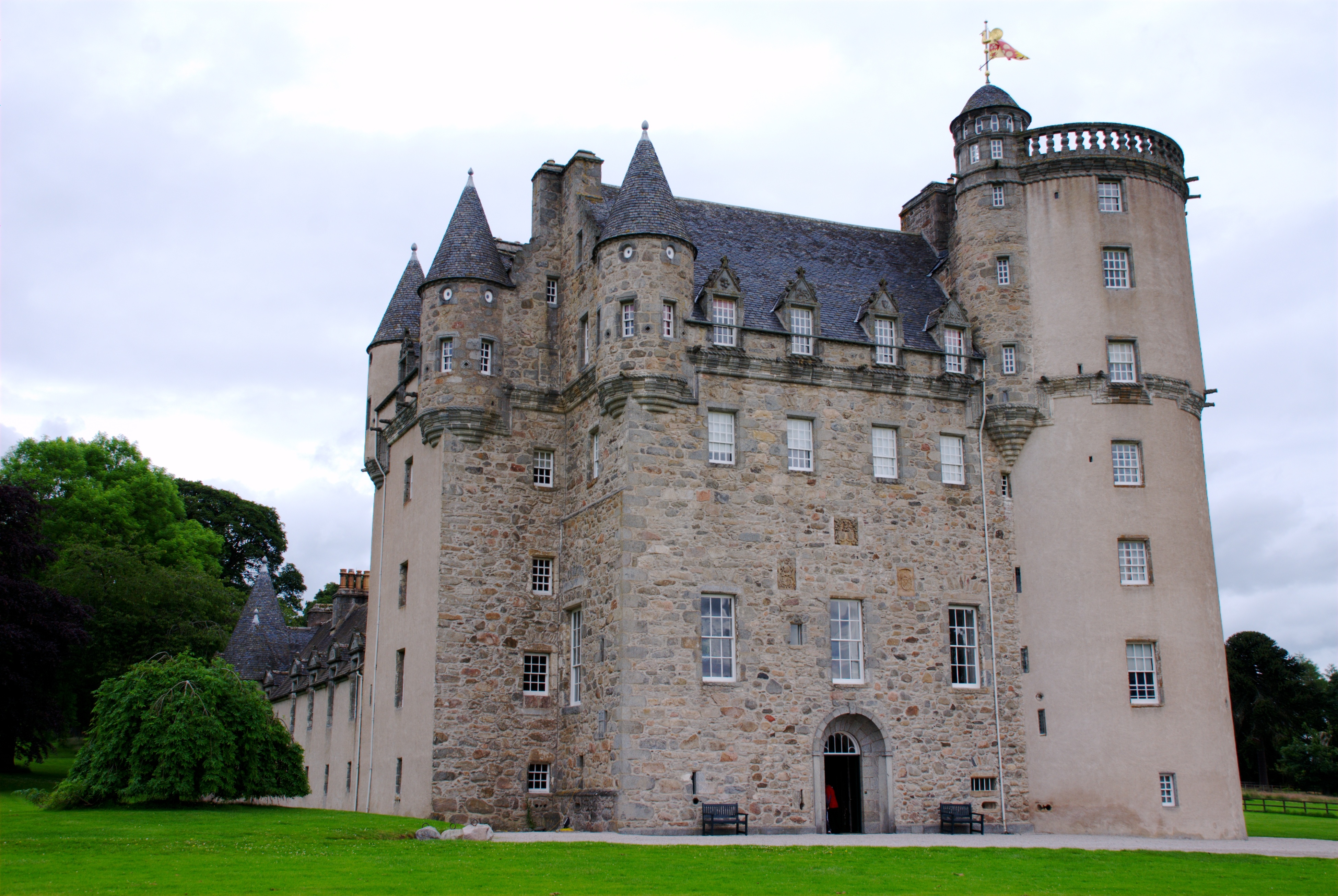
The building’s details make that history visible. HES records a 1672 datestone near the entrance, a broad curved bay on the south front and an east wing of about 1820, traditionally attributed to James Gillespie Graham. Turrets, elaborate window tracery and ornamental battlements brought a romantic castle character to the growing house. The listing also records surviving vaulted ceilings and seventeenth-century fireplaces: older domestic spaces within the later exterior.
02 / The estate around the walls
A garden descending towards the river
The landscape has its own sequence of changes. Lady Mary Fitzgerald Ross directed an important nineteenth-century phase of improvement, opening up the house’s relationship with its surroundings. HES records that defensive slit windows were enlarged to make more of the river views.
In 1847, a gardener from Holyrood Palace laid out the Italian Garden. Terraces and small flights of steps descended towards the Balnagown River, with ornamental planting and a central water feature. Elsewhere, a semicircular walled garden brought a very different shape to the estate. John Hay prepared an improvement plan for it in 1814.
Restoration following the estate’s sale in 1972 began another chapter. The castle and grounds remain in active use, with holiday properties across the wider estate. These layers give Balnagown much of its interest: a defensive position gradually adapted for views, gardening and everyday life. The historic garden record describes that development; present access depends on the estate’s current arrangements.
03 / The man behind the tradition
Black Andrew belonged to Milntown
Andrew Beg Munro, third of Milntown, belonged to a neighbouring family. In his 1898 History of the Munros, Alexander Mackenzie records royal grants to Andrew in 1512 and his office as chief mair of the Earldom of Ross. The same history preserves his reputation as Black Andrew of the Seven Castles, a name associated with extensive possessions and remembered cruelty.
Mackenzie treats the violent anecdotes as traditions handed down locally. One concerns an elderly woman allegedly killed after giving evidence against Andrew in a boundary dispute with Ross of Balnagown. The author also warns that some of the stories collected by Hugh Miller appear to mix dates and people. Even an old printed account needs to be read with its qualifications intact.
For Andrew’s death, Mackenzie places him at Milntown before 1522, then relays a story of a fatal fall on his own stairs. The account says he had ordered female harvest workers to undress and fell while coming out to inspect them. Its moral shape is unmistakable, but the circumstances are still presented as something said of him.
Sources for this section · 1
04 / The haunting tradition
How a neighbour’s ghost reached Balnagown
In Gregor Stewart’s 2016 Spooky Isles retelling, Andrew’s ghost first appears at his own home, called the Castle of Milton in the article. After that building’s demolition, the story transfers him to Balnagown. Stewart describes traditions of a threatening male figure watching women and the sound of someone running along a corridor.
Another version, preserved by the Paranormal Database, gives Andrew a different death: local people turn against him and hang him from a castle window. That should not be quietly combined with Mackenzie’s account of the fall at Milntown. They are competing endings to the same feared figure’s story.
Neither modern summary supplies a named witness, a precise incident date or an original statement for the Balnagown encounters. They establish a published haunting tradition, while leaving the experiences behind it difficult to examine. Andrew’s historical identity, the stories about his behaviour and the proposed identity of the apparition each remain separate questions.
05 / A gentler reported figure
The young woman with green eyes
Balnagown’s other familiar apparition is a young woman with striking green eyes. Stewart’s account describes her as smiling and kindly, and connects her with a princess supposedly buried within the castle walls. The Paranormal Database likewise records a smiling young woman, although its short entry does not identify her as royal.
No name, family connection or securely dated death was found to establish who this princess might have been. Nor did the reviewed heritage sources provide an archaeological discovery confirming a concealed burial. The detail of the eyes gives the telling a memorable human quality, but the princess’s identity and the story about her remains belong to folklore.
06 / An estate legend
The valuables that never returned
The estate’s own history preserves another dark story, set after the death of Alexander Ross, sixth laird, at the Battle of Alt na Charras in 1487. His widow Dorothy is said to have ordered the family valuables buried, then poisoned the servants who knew the hiding place.
It is a powerful tale of insecurity after a clan defeat, with the secret paid for in human lives. The estate labels Dorothy’s actions as something said to have happened, and gives no identified treasure find. It belongs alongside the castle’s other inherited stories as a legend, rather than a documented discovery or an invitation to search the grounds.
Sources for this section · 1
07 / Arrange your visit
Explore the grounds with the museum
Balnagown is a private family home. The estate currently directs visitors to Tain & District Museum and Clan Ross Centre for guided tours of the core estate, castle exterior and gardens. These arrangements offer a way to encounter the setting while respecting the household’s privacy.
The museum says its Balnagown tour normally lasts around ninety minutes, is offered at the estate’s discretion and must be booked at least a week ahead. It does not enter the castle. Contact the museum for availability, current cost, group arrangements and any questions about steps, surfaces or mobility before travelling.
Guests staying in estate accommodation may have garden access when the family is away, with an arrival briefing from estate staff. That is a separate arrangement from general public admission. The photograph above dates from September 2021; visitor information was checked on 15 September 2026 and should be confirmed directly when planning a visit.
Prepared for Scottish Paranormal / Haunted Scotland.
Sources and visitor information reviewed 15 September 2026.