01 / The documented castle
A strong tower with an Italian flourish
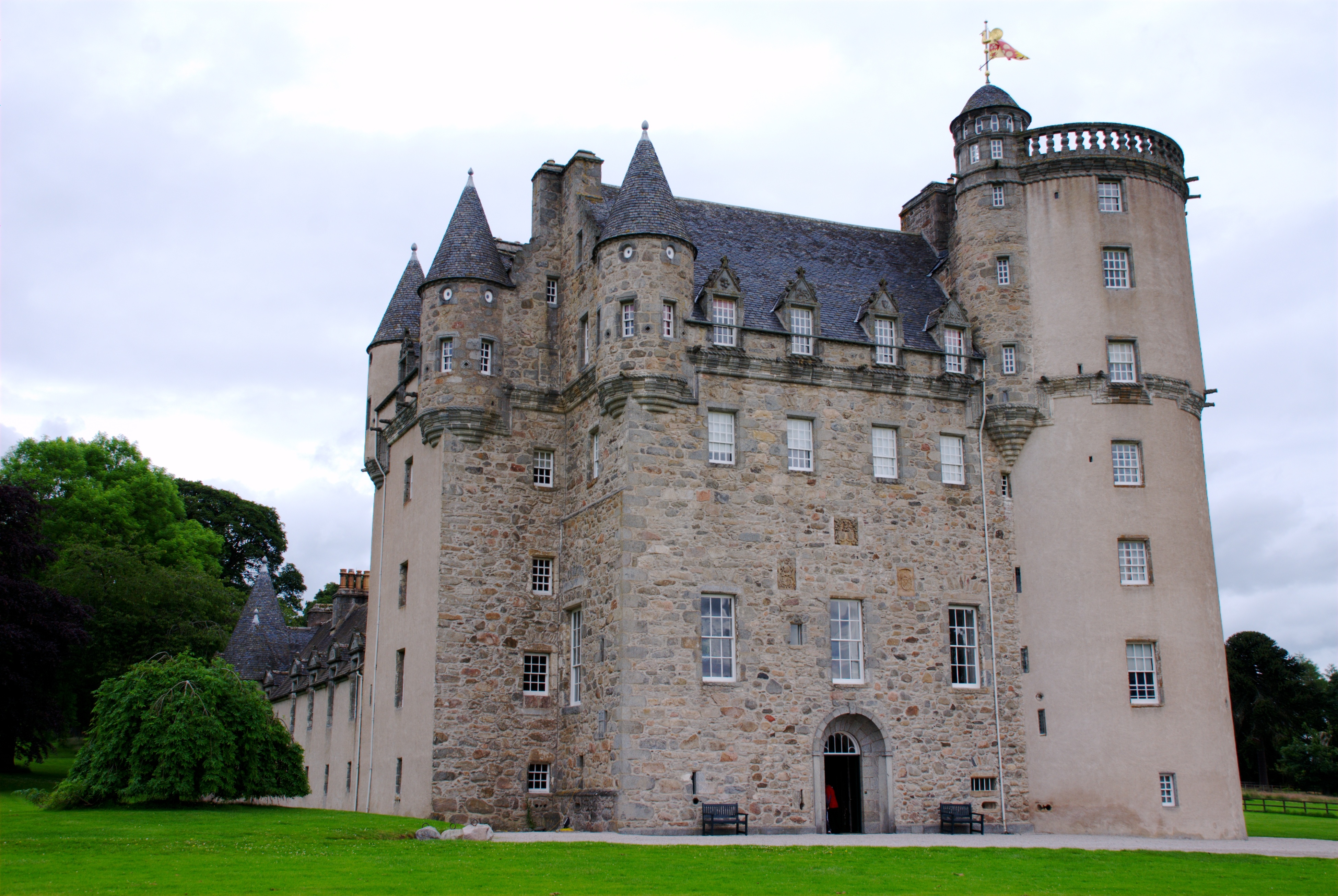
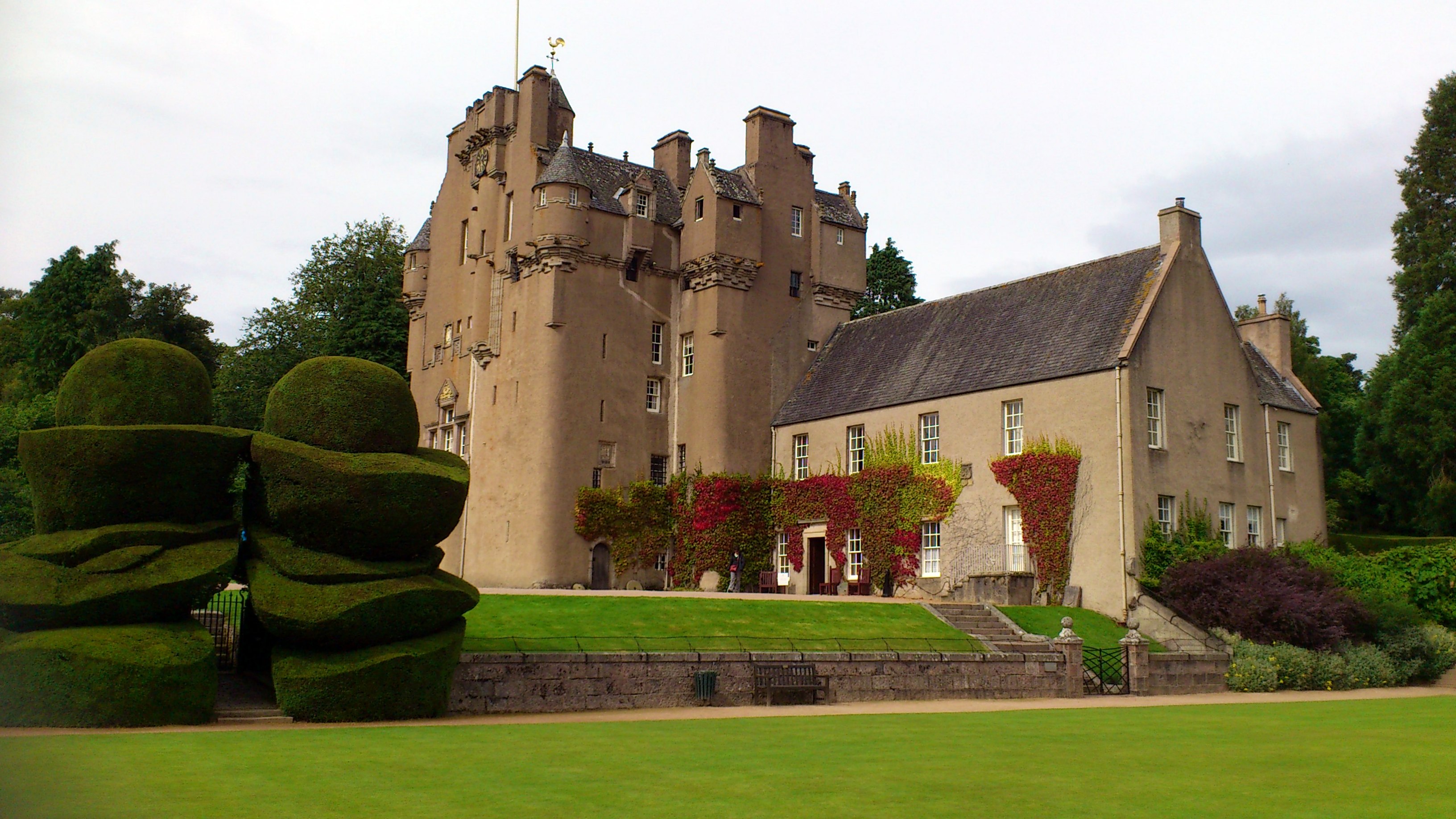
The Gordon connection reaches back to 1482, but the standing tower belongs to a later generation. Historic Environment Scotland dates it to around 1550. Its walls are granite rubble covered with pink harl, the protective roughcast finish that gives the building much of its character.
Aberdeenshire’s Historic Environment Record describes a vaulted basement with gun-loops, living rooms above and a round stair tower rising at the southwest corner. The rounded corners and stepped gables soften a building designed to provide a substantial, defensible home. Beneath the stair lies a small pit or prison, the space that later retellings connect with Kate.
The airy belfry at the top is an early nineteenth-century addition. HES records that the Gordons added its curved roof after seeing examples in Italy. A Venetian window belongs to the same period of change. These details give Abergeldie its particular personality: a Scottish tower house altered by the tastes and travels of the people who lived in it.
02 / Royal Deeside
The castle in the family photograph
The royal family leased Abergeldie from 1848 to 1970. Its proximity to Balmoral made it a useful neighbouring residence, and the Royal Collection records its use as a hunting lodge by Albert Edward, the future Edward VII. In October 1863, Princess Victoria, Crown Prince Frederick William of Prussia and their children stayed here during a visit to Balmoral.
Another Royal Collection photograph brings us into the garden on 9 October 1890. Taken by Alexandra, then Princess of Wales, it shows Queen Victoria with her granddaughter Louise, Duchess of Fife. The image was later used to decorate a tea plate: a small domestic object preserving a recognisable family moment at Abergeldie.
The house grew during the years of royal occupation. Nineteenth-century extensions spreading west from the tower appear in old photographs, but were removed in 1969. Comparing those views with the more compact building today reveals how much of a castle’s familiar outline can belong to a particular chapter in its life.
Sources for this section · 3
- Royal Collection Trust — Abergeldie Castle photograph, RCIN 2620015 (opens in a new tab)
- Royal Collection Trust — Alexandra’s photograph of Victoria and Louise at Abergeldie, RCIN 2930577 (opens in a new tab)
- Aberdeenshire Council — Royal occupation and removal of the later additions (opens in a new tab)
03 / The haunting tradition
French Kate and the hill beyond the castle
The best-known story concerns a French woman employed at Abergeldie, usually called Kittie Rankie or French Kate. In the version retold by Visit Cairngorms, she is accused of witchcraft, confined in the castle and eventually taken to a nearby hill to be burned. Her ghost is said to return through the house and its surroundings.
Other accounts change important details. HES calls her Katy Rankin and records a local legend of imprisonment in the pit beneath the stairs, followed by hanging on the hill. Peter J. Gordon’s Deeside Tales names the hill as Creag nam Ban and preserves the burning tradition.
The shared outline is poignant: a woman accused, held captive and remembered long after her death. The differing names and endings should remain visible. No contemporary trial record establishing her identity or fate was located in the sources reviewed for this guide; the heritage listing itself presents the episode as local legend.
04 / An attributed account
When the cellars became unsettling
Visit Cairngorms also relays an account associated with Patricia Lindsay, described as a local doctor’s daughter. She was reportedly comfortable playing in the castle’s cellars during daylight but avoided them after dark, recalling disturbing noises and the sound of bells through the stonework.
The tourism feature places this in the mid-nineteenth century, but supplies no original interview, diary or precise incident date. It is a published recollection at a distance, with those details still to trace. It also describes sounds, rather than a clearly identified sighting of Kate. Keeping the experience and the proposed identity separate leaves room to consider what was heard without putting additional claims into the witness’s mouth.
Sources for this section · 1
05 / How a story survives
A remembered visit and a changing tale
In Deeside Tales, Peter J. Gordon remembers visiting the cellar with his son Andrew in 2004, guided by the laird, John Howard Seton Gordon. They were shown the place associated with Kate’s imprisonment. Gordon describes their emotional response to the story and setting, and follows it with a poem. This is a personal account of encountering the tradition, rather than a report of seeing its ghost.
A spring 2007 Aberdeen hillwalking-club newsletter preserves another version: Kate angers her mistress by saying that the laird is with another woman. The editor observes that the same story is told of the Brahan Seer and Lady Seaforth. That comparison offers a useful glimpse of folklore in motion, as a familiar narrative takes on the names and landscape of a particular place.
06 / The castle and the Dee
A royal crossing and a very real threat
The river was woven into the household’s daily geography. A private suspension footbridge built in 1885 by Aberdeen engineers Blaikie Brothers allowed passage across the Dee. HES records that Queen Victoria paid for it for the benefit of guests staying at Abergeldie. Its lattice towers and wire-rope construction belong to the engineering story of Royal Deeside; the historic bridge record is not a current walking-route recommendation.
In early January 2016, that riverside position became perilous. Following severe flooding, the Dee swept away land beside the castle. Sky News reported that John Gordon and his wife had left their home while its safety was assessed. Photographs showed the tower standing alarmingly close to the eroded bank.
By 6 January, the Press and Journal was documenting emergency work placing rock along the damaged riverbank. These dated reports record both the danger and the effort to save the building. Abergeldie’s survival involves maintenance, weather and people responding to a crisis, as well as the much older stories gathered around its walls.
Sources for this section · 3
07 / Current access
A private home to appreciate with care
Abergeldie is recorded as a private residence, and no public opening or castle-tour booking arrangement was verified on 15 September 2026. A 2023 planning statement concerning the wider estate explicitly says that the estate sale excluded the castle. Estate accommodation or development plans should therefore not be read as an invitation to visit this house.
Respect the castle’s privacy and any local barriers or notices. Do not enter its immediate gardens, approach the riverbank or attempt to use the old private bridge on the strength of a historic photograph or guidebook description.
The photograph above, taken in April 2020, offers a good way to study the tower’s pink walls, stepped gables and belfry against the hillside. The linked royal photographs open a different window: a place of family life, remembered stories and an enduring relationship with the Dee.
Prepared for Scottish Paranormal / Haunted Scotland.
Sources and visitor information reviewed 15 September 2026.