01 / Reading the castle
A house built around older towers
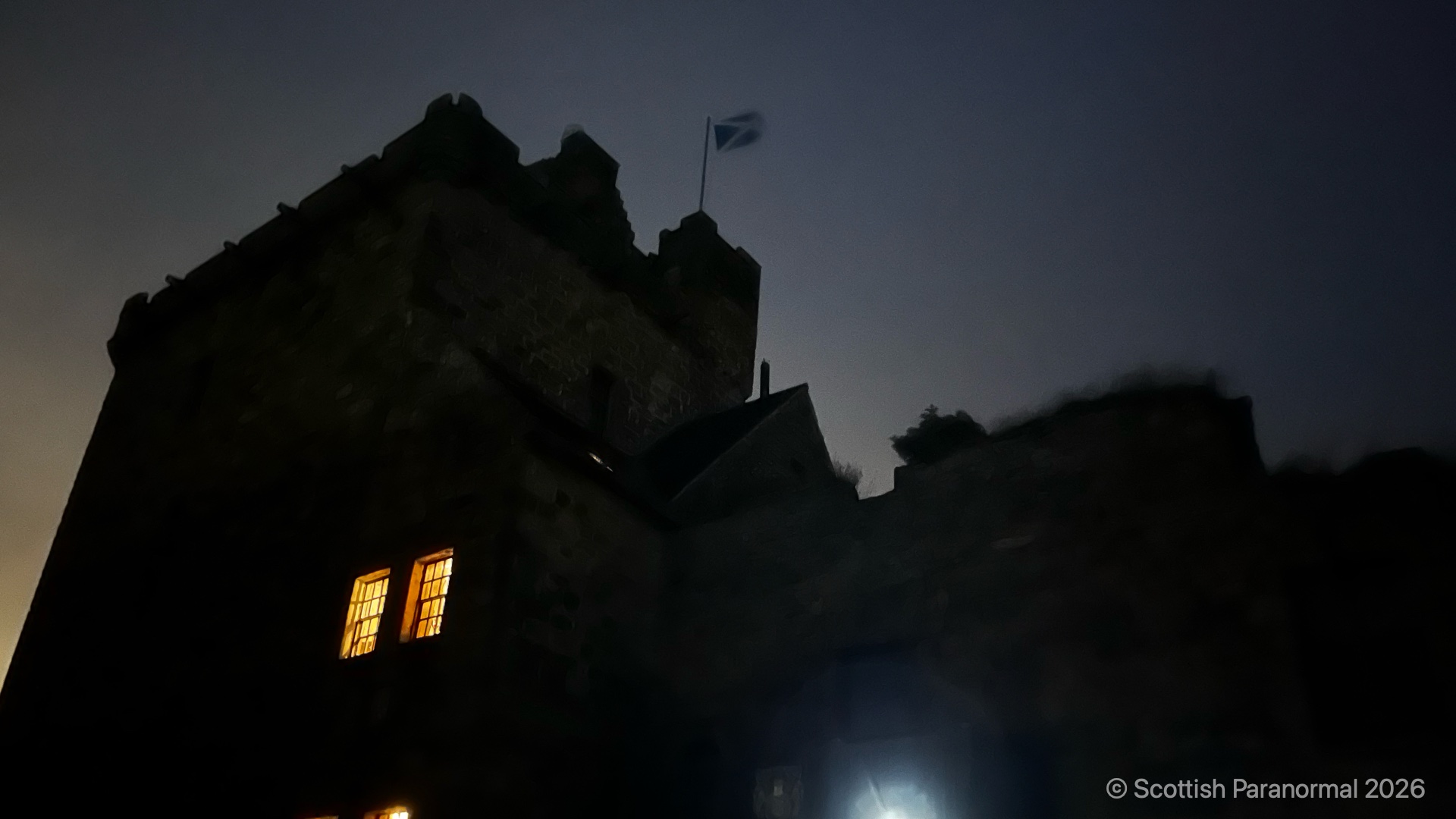
Wemyss is a building of many periods. Historic Environment Scotland identifies late fifteenth-century fabric, possibly incorporating something earlier, followed by sixteenth-century additions within a curtain wall. A rectangular tower and the rounded Gilbert Tower survive within the much larger residence.
In 1670, David, second Earl of Wemyss, extended the castle with the master mason Robert Mylne. Victorian work followed, some of it later removed during twentieth-century restoration. Inside, HES records vaulted lower rooms, decorative plaster ceilings and pine panelling: reminders that comfort and display became as important as defence.
One particularly personal alteration came in 1897, when Sir Robert Lorimer created a memorial chapel in a former cellar and kitchen. Its marble figure of Millicent Erskine Wemyss was carved by Princess Louise. These are documented features of a private house; they are not rooms offered as part of a garden visit.
Sources for this section · 1
02 / Mary and Darnley
A reunion with consequences far beyond Fife
In February 1565, Mary, Queen of Scots, met Henry Stuart, Lord Darnley, at Wemyss. It is often described as their first meeting, but HES historian Andrew Burnet explains that they already knew one another: Darnley had visited the French court as a boy. The encounter in Fife was a reunion, with marriage now a possibility.
Mary had been widowed for more than four years. Darnley was tall, accomplished in courtly pursuits and, like her, descended from Henry VII of England. Their relationship therefore carried dynastic possibilities as well as personal attraction. They married in Edinburgh on 29 July that year.
The marriage would become bitterly troubled, and Darnley was murdered in 1567. Their son became James VI and later inherited the English throne. Wemyss belongs near the beginning of that consequential story, before the familiar scenes of conspiracy and violence. A family residence above the shore had become a setting for decisions affecting two kingdoms.
Sources for this section · 1
03 / The working coast
Coal, salt and the wealth behind the walls
The estate’s history reaches beyond its grand rooms. HES records a castle at Wester Wemyss by 1423 and coal extraction in the area by at least 1428. A charter of 1511 made the castle the principal residence of the barony and authorised a new harbour. House, settlement and working shore developed together.
Coal and salt became foundations of family wealth. David, second Earl, invested in mines, saltpans and harbours during the seventeenth century, while later generations expanded the industrial estate. The designed landscape and the busy coastline were closely connected, even when their purposes looked very different.
In the later nineteenth century, increasing coal production brought demand for workers’ housing. Coaltown of Wemyss developed as an estate village, with further housing and transport schemes elsewhere in the district. Miners, salt workers, builders and gardeners helped shape the landscape too, through work that supported the household across generations.
Sources for this section · 1
04 / The family’s haunting tradition
A lamp, a green gown and an empty room
The Countess of Munster’s My Memories and Miscellanies, published in 1904, preserves Green Jean stories reproduced by castle historian Martin Coventry. Her sister Millicent told her the story; the Countess was not describing her own sighting.
During preparations for Christmas theatricals, Millicent’s eldest daughter and a friend reportedly heard rustling near the stage. A pale woman in green emerged carrying a lighted lamp, crossed into a small adjoining room and closed the door. When the girls followed with a candle, they found the room empty.
The Countess also relates Millicent’s report of walking beside a green-clad figure along a gallery before it vanished. No secure identity is supplied for the woman. The book’s publication in 1904 should not be mistaken for the date of these encounters. The recollections preserve how these familiar rooms became briefly unfamiliar to the reported witnesses.
Sources for this section · 1
05 / The stories around the castle
Green Jean, the cave and the wandering monk
Ryan O’Neill’s January 2024 Scottish Paranormal article, Green Jeans Cave Ghost & The Monk, carries the tradition into the surrounding landscape. It describes Green Jean’s green clothing and rustling gown, then turns to a nearby cave and woodland associated in local lore with a wandering monk.
The article presents these as connected stories of the castle and village. It does not supply a named modern witness, a dated investigation or a recording establishing a connection between the figures. Its value here is as a contemporary retelling of the local tradition, with the monk’s identity and the relationship between the stories still unresolved.
Keep the places distinct when exploring further. Macduff’s Castle, the ruined stronghold above the famous Wemyss Caves at East Wemyss, is a separate monument, around 2.5 kilometres from Wemyss Castle. Shared family names and coastal scenery can make stories drift between locations; each place deserves its own history.
06 / A living chapter
From heated walls to a garden reborn
The garden has its own ambitious history. The estate’s account describes late eighteenth-century plans for heated walls, pineapple houses and mushroom houses, intended to extend the growing season and supply fruit beyond its usual months. Such ambitions depended on labour and fuel, connecting horticultural luxury to the estate’s industrial resources.
War and changing priorities gradually reduced that scale of gardening. By the early 1990s, the walled garden needed a new purpose. Writing in 2018, Charlotte Wemyss recalled beginning its restoration in 1994 with five apple trees, geese, redcurrants, rhubarb and buried barbed wire. She describes learning through planting, moving beds and changing her mind, rather than following one fixed plan.
The result is a six-acre walled garden with roses, clematis, ornamental trees and generous stretches of lawn. Beyond it, the woodland garden has spring displays of Erythronium beneath beech trees. These are living places whose appearance changes with the weather and season. Their renewed life makes a fitting counterpoint to the castle’s older stories: another generation leaving its mark, through patient work that visitors can experience for themselves.
07 / Planning your visit
Book the gardens; respect the private house
Checked on 16 September 2026, the official website advertises garden visits from mid-April to 31 July, Monday to Friday, 9.30am–4.30pm, by prior appointment only. September is outside that advertised season. Contact the gardens before travelling to confirm a date, the current charge and arrival arrangements; this is not a walk-up castle attraction.
The castle itself is not open to the public. A garden appointment does not include its interiors. Use the official visitor page to arrange your visit, including any accessibility requirements. Parking near the walled-garden entrance can be discussed in advance.
The gardens advise suitable footwear for wet ground, welcome dogs on leads and suggest bringing your own refreshments because they do not provide teas. Choose a confirmed spring or summer appointment, allow time to enjoy the planting, and leave the household its privacy. The setting offers plenty to appreciate without entering the rooms where its haunting is remembered.
Sources for this section · 1
READ / SCOTTISH PARANORMAL
Explore the archive
- PUBLIC ARTICLE · Green Jeans Cave Ghost & The Monk — Ryan O’Neill’s wider local folklore article (opens in a new tab)
Ryan’s wider local folklore article links Green Jean with the nearby cave and wandering-monk tradition.
Prepared for Scottish Paranormal / Haunted Scotland.
Sources and visitor information reviewed 16 September 2026.