01 / The documented castle
A small city of stone above the capital
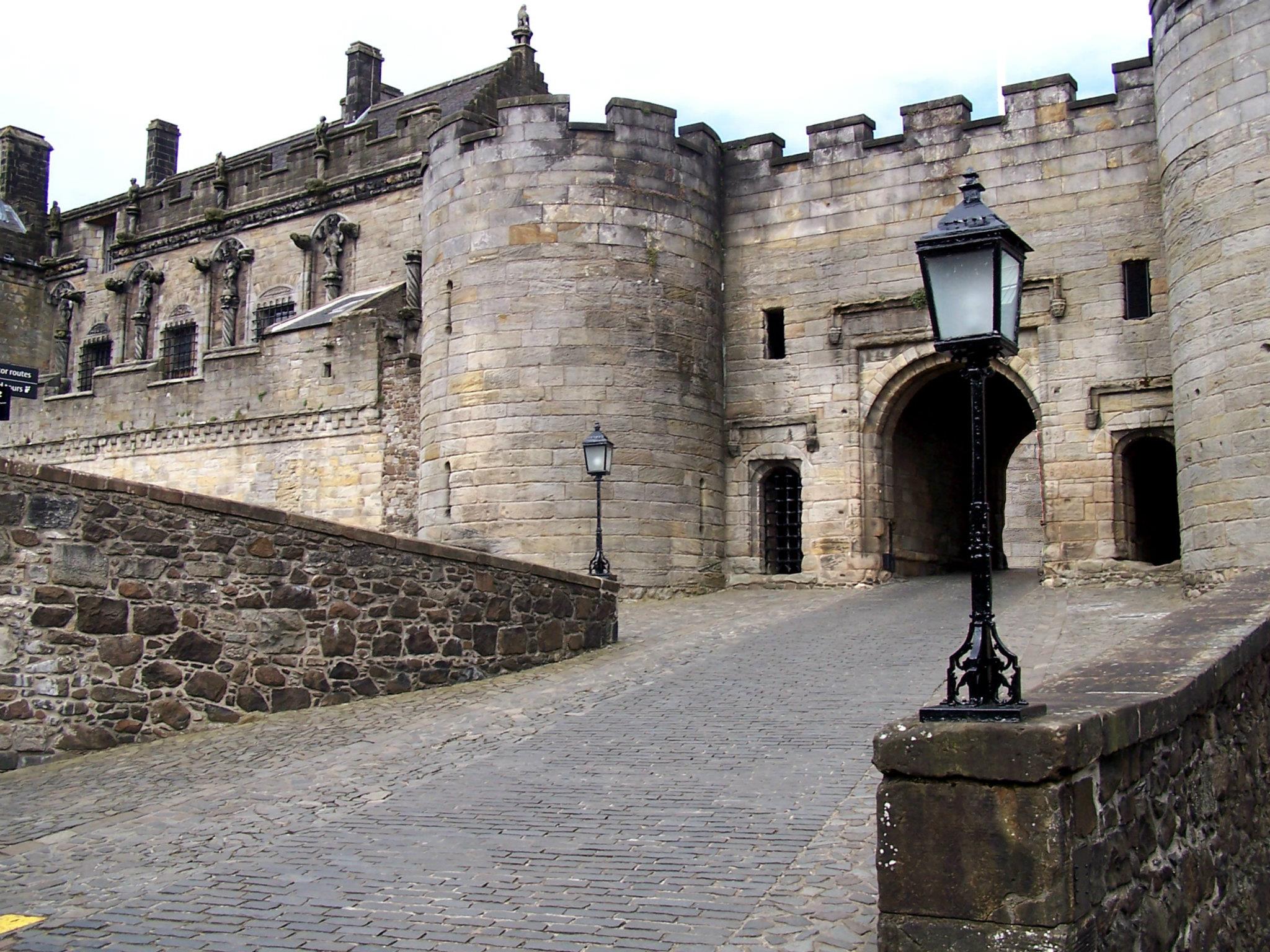
Edinburgh Castle developed over many centuries on a site used as an Iron Age hill fort. Its defensive advantage is visible from the streets below: the rock rises abruptly, leaving attackers with formidable ground to cross. The surviving complex contains royal, religious and military buildings from different periods.
The castle changed hands during the Wars of Independence. In 1314, Thomas Randolph led the Scots in a night attack that recovered it from English occupation. Later defences include the Half Moon Battery, constructed after the destructive siege of 1573. The garrison remains part of the castle’s life today.
St Margaret’s Chapel offers a much smaller encounter with the medieval past. David I built it around 1130 in memory of his mother; its arches survive alongside later fittings. In the Royal Palace, Mary Queen of Scots gave birth to James VI in 1566. These intimate rooms bring the people behind the great skyline into focus.
02 / Lives behind the walls
The people who left their marks below Crown Square
The vaults below Crown Square held prisoners of war between 1757 and 1814. Historic Environment Scotland’s account draws on letters, records, objects and surviving graffiti to reconstruct their lives. Many were sailors captured during Britain’s conflicts with France and other nations; American prisoners were also held here.
Captivity meant uncertainty as well as confinement. Exchanges could be slow, leaving men waiting far from home. Some passed the time by making objects from available materials, including bone, straw and wood. They sold their work to visitors, earning money for small comforts. Surviving models and other crafts preserve something of their patience and skill.
Look closely at the prison displays and the marks left on the doors. Names and carved pictures offer a more individual connection than the word “dungeon” can convey. Each surviving trace came from someone who had a life before imprisonment. The history gives these spaces their weight; any haunting account must be considered alongside it on its own evidence.
Sources for this section · 1
03 / The best-known traditions
Music that disappears beneath the Royal Mile
The lost piper story begins with the discovery of a tunnel beneath the castle. In Mercat Tours storyteller Stefanie’s 2024 retelling, a regimental piper enters it while playing, allowing soldiers above ground to follow his progress. Near the Tron Kirk, the music stops. A search fails to find him, and the passage is sealed.
The story continues with faint piping said to rise beneath the Old Town’s cobbles. It is a compelling way of imagining a hidden city, but the retelling supplies no contemporary record identifying the musician or confirming this tunnel’s route. Scottish Paranormal’s older version differs over whether a search was attempted. Those details belong to the tradition’s variations.
Mercat also recounts a headless drummer whose warning is placed before Cromwell’s attack in 1650. Here, too, the date is part of a later account, rather than a dated witness statement presented for examination. The piper carries a story of disappearance; the drummer carries a warning. Their memorable roles help explain why both remain woven into Edinburgh’s storytelling.
04 / Other reported presences
A dog among the soldiers’ memories
The castle’s Dog Cemetery has a documented connection with the garrison: regimental mascots and soldiers’ canine companions were buried there. That small place of remembrance gives the military story a gentler, domestic detail. Animals belonged to the community living within these walls.
A ghost dog appears in Scottish Paranormal’s older account, which describes both a wandering animal and sounds attributed to it. The article also mentions spirits associated with French and American prisoners, and a piper on the battlements. These are brief reports without named witnesses, encounter dates or recordings.
They remain useful clues for further research. A firsthand description could establish where a person stood, what they noticed and what else was happening nearby. Until that material emerges, the cemetery’s history and the reported animal’s identity remain separate questions. The same care applies to linking an indistinct presence with a particular prisoner.
05 / Following the research
What the 2001 Edinburgh experiment actually examined
An important correction concerns the study mentioned in our older article. Richard Wiseman and colleagues conducted their April 2001 Edinburgh experiment in ten South Bridge Vaults. These are a separate location from Edinburgh Castle’s prison vaults. The research was published in the British Journal of Psychology in 2003.
The study involved 218 participants, each spending about ten minutes in a vault. Ninety-five reported at least one unusual experience. Reports clustered in spaces already associated with such experiences, and that pattern persisted among participants reporting no prior knowledge of the particular locations. The researchers also found relationships involving lighting and the dimensions of the spaces.
The authors interpreted their findings as support for environmental influences on haunting experiences. They did not establish the presence of a ghost, and the study cannot substantiate a castle haunting. It nevertheless recorded experiences worth examining. Keeping the reported experience, its interpretation and the correct location distinct allows the research to inform the discussion without turning it into a claim it did not test.
06 / Making the visit count
Leave time for the lives beyond the legends
The National War Museum adds another perspective, tracing more than four centuries of conflict through objects, artworks and personal stories. Admission is included with a castle ticket. Its home in Hospital Square was built as an eighteenth-century ordnance store and later used as a military hospital, before the museum opened in 1933.
The collection includes letters sent home, weapons and paintings. Give a personal item the same attention as the grand architecture: the words someone wrote to a family member can make the distance between past and present feel surprisingly small. Let the surviving material guide the questions you take away.
On 15 September 2026, the castle’s official museum page carried a partial-closure notice for building repairs. Check that page before making a particular gallery or object central to your plans. Other castle attractions have their own opening arrangements, so leave some flexibility in your route.
07 / Planning a visit
Book the castle and give it time
Checked on 15 September 2026, the usual April–September castle hours are 9.30am–6pm, with last entry at 5pm. The normal October–March day ends at 5pm, with last entry at 4pm; festive dates have exceptions. The castle closes on 25 and 26 December. Use the official timetable for your chosen date.
Book online in advance. The operator warns that tickets can sell out well ahead, and once online availability is exhausted there are no additional tickets at the gate. Allow at least two hours for the main attractions, with more time if you enjoy reading displays or exploring the museums.
Check short-term closures before travelling, especially in poor weather. Individual buildings can have different hours. The One o’Clock Gun normally fires at 1pm except Sundays, Good Friday and Christmas Day. Its sudden report is part of the working castle’s soundscape; consider that timing when planning a quieter visit.
Sources for this section · 1
08 / A route that suits you
Plan for the climb, the cobbles and the crowds
The route from the entrance to Crown Square runs uphill for about 350 metres over uneven cobbles, with a steepest gradient of 15 degrees. A mobility vehicle can be arranged at the entrance, although it does not operate between 12.15pm and 1.15pm. Check the published wheelchair dimensions and contact the castle if you need assistance.
Access differs between buildings. The Great Hall and National War Memorial have ramps; the Prisons of War involve short flights of steps. Staff can direct visitors around the stepped exit where necessary. Read the detailed access guide before deciding which spaces suit you.
Suitcases and rucksacks of 30 litres or more are not admitted, and there is no luggage storage. Only assistance dogs may enter. Ear defenders and sensory resources are available. The September access notice also flags toilet refurbishment and lists alternatives, including accessible facilities at the National War Museum. Confirm current arrangements with staff. Thoughtful preparation leaves more attention for the place itself.
Sources for this section · 1
Prepared for Scottish Paranormal / Haunted Scotland.
Sources and visitor information reviewed 15 September 2026.