01 / The documented castle
A courtyard framed in stone
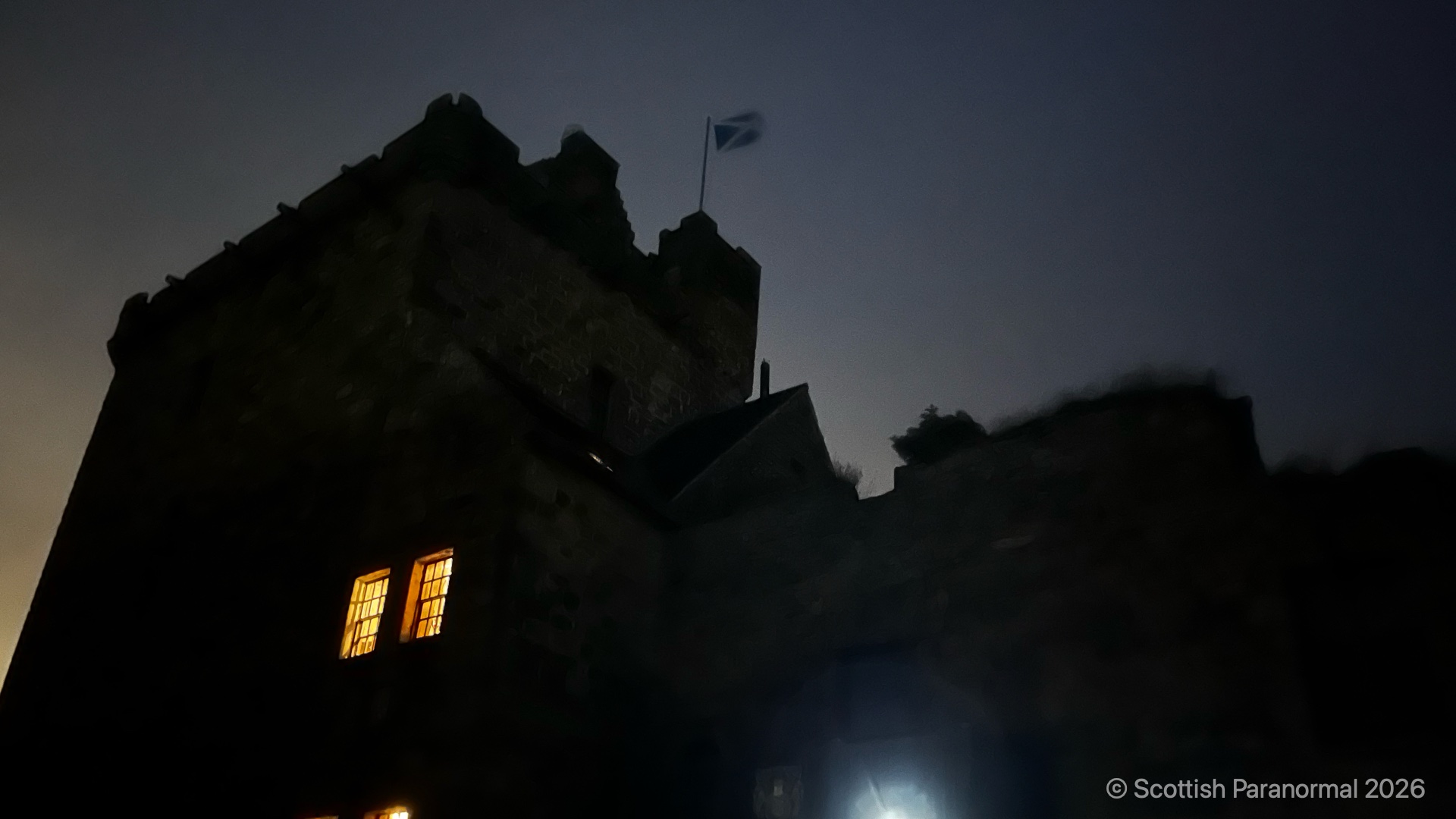
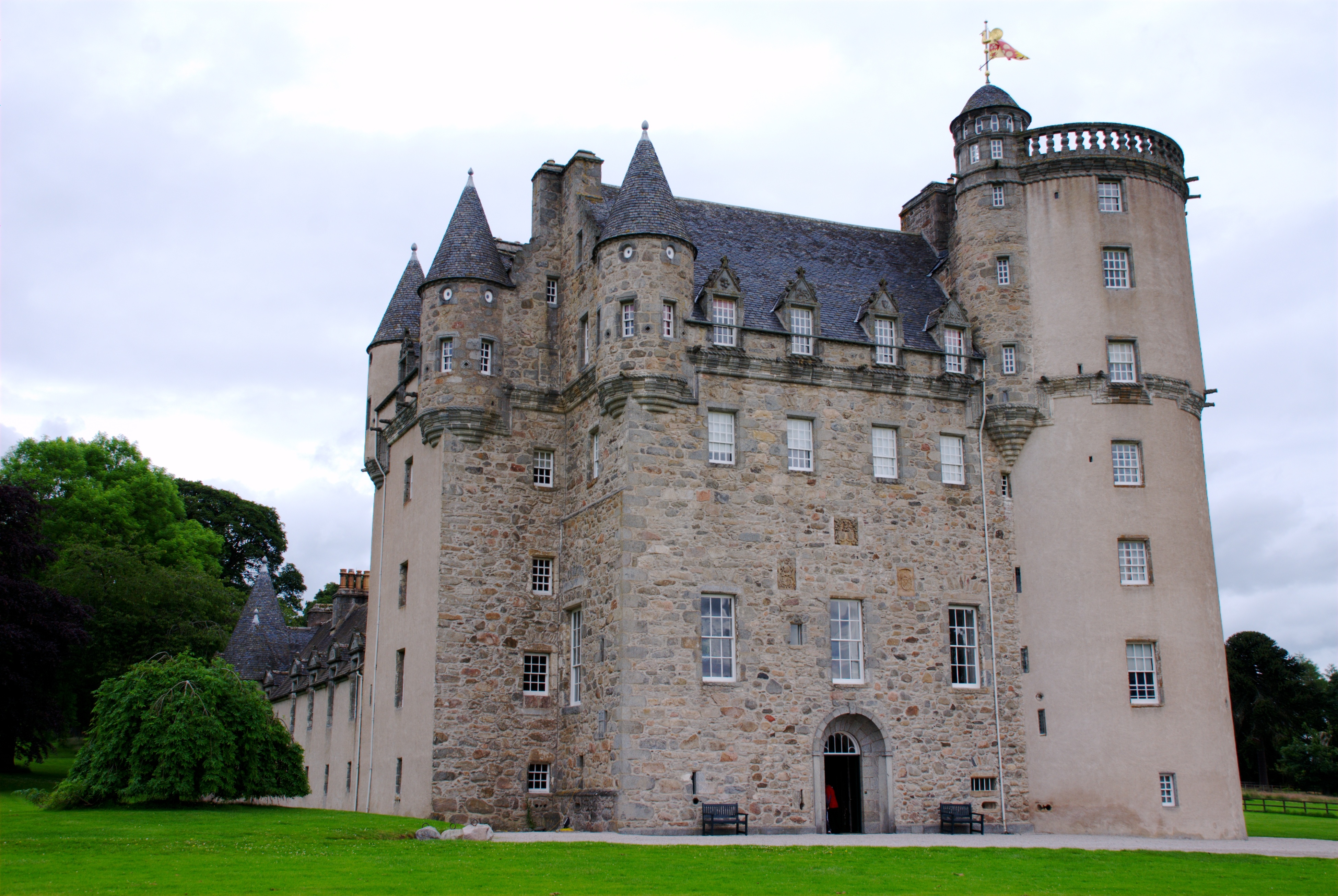
Historic Environment Scotland dates Earlshall to 1546, when it was built for Sir William Bruce. The principal house follows an L-shaped plan, with three storeys and an attic. A stair turret occupies the angle, while an oval tower rises at the north-east corner. These changing shapes give the building much of its character.
The arrangement continues around a courtyard. A high western wall, carrying a gateway and the Bruce arms, links the main house to a smaller sixteenth-century tower. A seventeenth-century range completes the group known as Dummy Daws. Earlshall is best understood as a collection of connected spaces, built and adapted over time.
The listing records vaulted ground-floor rooms, a hall above and the painted gallery on the second floor, dated 1617 and 1620. It also names Robert Lorimer’s restoration for R. W. R. Mackenzie in 1891. The castle seen today brings those earlier rooms together with later craftsmanship.
Sources for this section · 1
02 / A world above the room
Heraldry, animals and painted virtues
The gallery offers a remarkably intimate glimpse of the household’s visual world. A nineteenth-century account by Andrew Jervise, quoted in David Laing’s published paper, describes a curved timber ceiling originally divided into more than three hundred panels. Arms, plants and animals shared the surface with figures representing the virtues.
The scheme used black and white. Faith, Hope, Charity and the other virtues appeared with their familiar attributes and Latin labels. Picture the contrast between the long room below and that crowded canopy of emblems overhead: family identity, moral instruction and the natural world brought into a single decorative scheme.
The same account records damp, broken panelling and damaged decoration beneath a leaking roof. That observation belongs to the nineteenth century, before the later restoration. It makes the gallery’s survival more affecting: the room’s renown rests partly on something that came close to being lost, and on the people who recorded it before further change.
03 / Before and after restoration
The castle preserved on paper
Earlshall can also be explored through the drawings and photographs held by Historic Environment Scotland. Its Trove record includes Robert Bruce Armstrong’s drawings from 1877: courtyard entrances, armorial stones, fireplaces and views of the house. They direct the eye towards details that a distant view can easily miss.
The archive also preserves painted design fragments connected with the gallery and adjoining room. Its notes distinguish these materials from other decoration filed within the same collection, including a design from Edinburgh’s Lawnmarket. That distinction matters when following an individual pattern back to its original setting.
The site record gathers observations from different generations. A 1933 account describes the house as ruinous around 1890 and subsequently restored; an Ordnance Survey visit in 1964 found it in excellent condition. Those are dated assessments. The drawings remain especially useful for comparing what earlier observers chose to record, without treating every historic photograph or description as a picture of today.
Sources for this section · 1
04 / A garden of separate rooms
Clipped yews and a carefully composed view
The garden is an essential part of Earlshall’s appeal. HES records Robert Lorimer’s redesign between 1891 and 1900, working with Mackenzie around the surviving enclosure. Before that work, livestock had grazed within the partly ruined walls. The renewed layout drew inspiration from the enclosed gardens of seventeenth-century Scottish houses.
Lorimer arranged five principal areas, their boundaries creating a sequence of changing views. The topiary lawn, known as the Pleasaunce, received already shaped yews brought from an Edinburgh garden during the 1890s. Their sculpted forms gave the new composition an immediate sense of maturity.
The design attracted attention well beyond Fife. HES notes Gertrude Jekyll’s admiration and its influence on later gardens, including Sissinghurst and Hidcote. Look at photographs of Earlshall with that in mind: the castle, walls and clipped greenery are parts of one composition. The inventory explains the historic design; it does not establish which areas are available to visitors today.
Sources for this section · 1
05 / The haunting tradition
Footsteps attributed to Bloody Bruce
The best-known haunting at Earlshall concerns Sir Andrew Bruce, remembered as Bloody Bruce. Castle historian Martin Coventry records the tradition that his footsteps are heard on the stairs. The account offers a particular sound and setting, but no dated encounter, named witness or original testimony to examine.
Coventry connects Bruce’s reputation with the killing of Covenanter Richard Cameron at Airds Moss in 1680 and the removal of Cameron’s head and hands to Edinburgh. That association gives the ghost story its emotional force. It does not establish whose footsteps anyone heard.
The tradition is retained here with those limits intact. No route through the rooms, appearance, spoken message or pattern of activity is supplied by this source. What survives is a spare and memorable image: movement on a staircase, attributed to a former inhabitant whose name carried a lasting reputation. The circumstances behind the reported sounds remain unresolved.
Sources for this section · 1
06 / Planning a visit
Make arrangements before setting out
Checked on 15 September 2026, the official Earls Hall Castle website advertises weddings, dining and corporate events, with gardens and a marquee among its settings. It invites enquiries and arranged viewings. The pages checked do not provide a general daily admission timetable for sightseeing inside the castle or gardens.
The gardens also open occasionally through Scotland’s Gardens Scheme. Its 31 May and 28 June 2026 afternoons are now listed as past openings, with no forthcoming date shown on 15 September. Check that listing for future open days.
For current arrangements, contact info@seveneventsuk.com or 01592 372769. The venue gives its address as Earlshall Road, Leuchars, St Andrews, KY16 0DP. Explain whether you are enquiring about an event, a viewing or a heritage visit, and confirm exactly what access can be offered before travelling.
Ask about arrival instructions, parking and the surfaces or steps along your proposed route. If mobility or other access needs would affect your visit, discuss them directly with the team; no detailed access statement was established in the pages checked. Historic garden descriptions and older property advertisements cannot confirm present entry arrangements. Visit within the booking or permission you have agreed.
07 / Follow the family into Leuchars
Stone memorials at St Athernase
St Athernase Church provides another connection with the Bruce family in Leuchars. HES records memorial slabs to Sir William Bruce and Lady Agnes Bruce of Earlshall inside the church. They give the family story a tangible presence beyond the castle walls, through monuments made to preserve individual names.
The building itself deserves time. Its Romanesque chancel and rounded apse preserve richly worked medieval architecture, including external arcading and carved details beneath the roofline. Later rebuilding and restoration added further layers. Looking closely at those changes offers a useful companion to Earlshall, another place where surviving fabric carries more than one period.
This remains an active church. Consult the current Leuchars St Athernase and Tayport Parish Church website before arranging a visit, and check directly if seeing the interior or memorials is important to your plans. Give services and other church activities priority. The connection is historical; no additional haunting is claimed here for the church or its burial ground.
Prepared for Scottish Paranormal / Haunted Scotland.
Sources and visitor information reviewed 15 September 2026.