01 / The documented castle
The Boyds of Kilmarnock
Originally called Kilmarnock Castle, Dean takes its later name from the wooded valley around it. The Boyd family held this stronghold for more than four centuries. Their rise tied the estate to the struggle for Scotland’s crown: Robert the Bruce rewarded Sir Robert Boyd’s support with lands at Kilmarnock and West Kilbride.
By the fifteenth century, the family stood close to royal power. Historic Environment Scotland connects the palace’s construction with Lord Boyd’s guardianship of James III; Boyd’s son Thomas married the king’s sister. The household needed rooms capable of expressing that influence as well as providing shelter.
Dating the surviving keep requires care. The operator’s interpretation places its completion around 1350, while the national listing describes a tower of the late fourteenth or early fifteenth century. Both identify a medieval stronghold, but they do not supply one agreed construction year. The palace belongs to a later phase, generally placed around the middle of the fifteenth century.
02 / Reading the buildings
From a defended tower to a house of influence
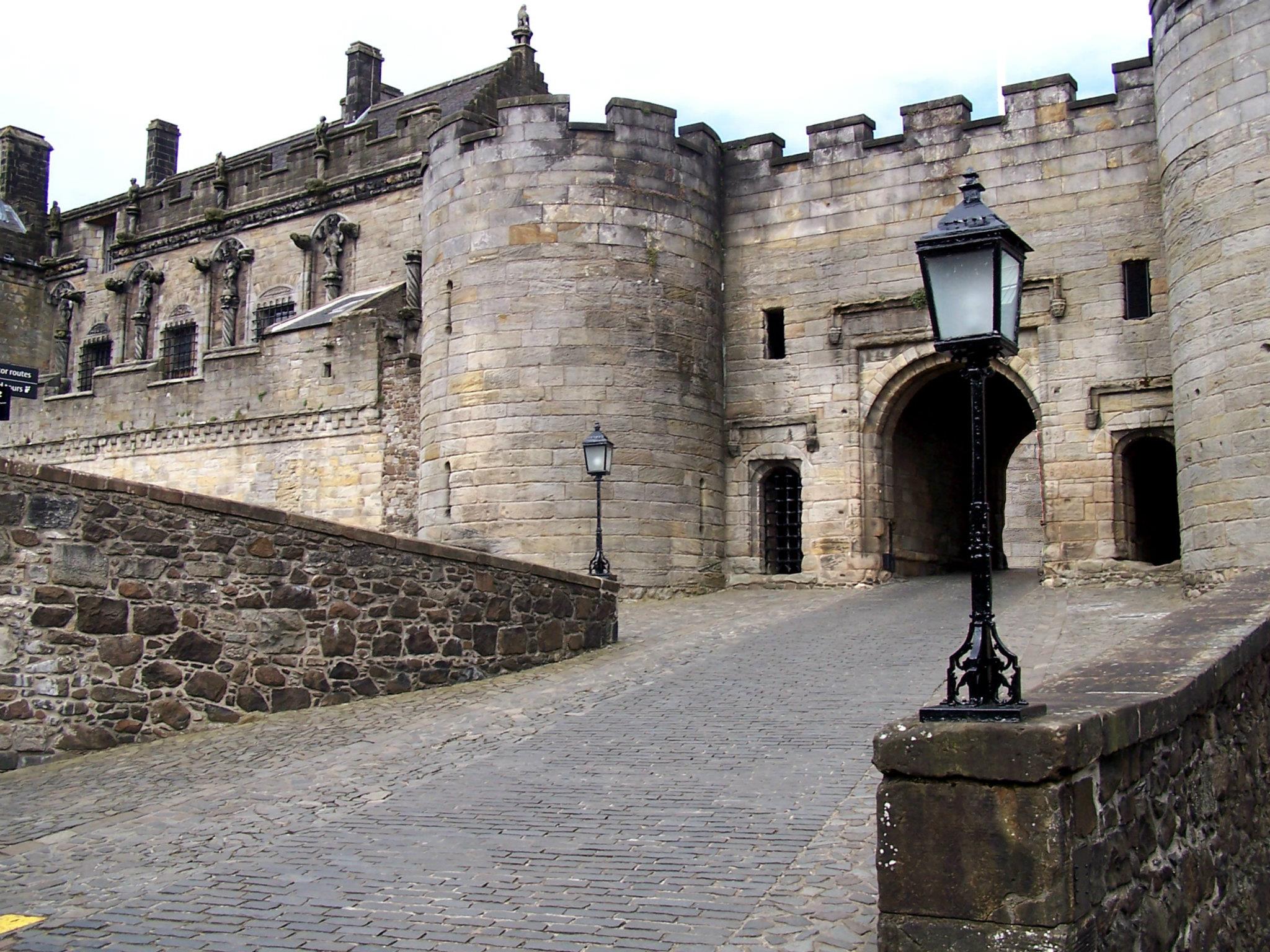
The keep’s limited windows and elevated original entrance make its defensive purpose visible. The operator records walls between two and three metres thick, with battlements about nineteen metres above the ground. Inside, the household occupied several levels, with a great hall, kitchen, private chambers and a musicians’ gallery. Defence and domestic life shared the same confined vertical space.
The palace offers a different impression. Its larger windows, banqueting hall and private rooms gave the Boyds a setting for hospitality and public standing. The operator dates this building to around 1460. Look above the main door for a later survival: the weathered Boyd arms, dated 1642. This is a useful reminder that families continued altering and marking their home long after its first construction.
The keep also contains a bottle dungeon, entered through a narrow opening into a vaulted chamber. Its physical confinement needs no invented detail to make an impression. Compare that restricted space with the hall above: the same building accommodated comfort, authority and imprisonment.
03 / Fire and recovery
The castle that had to be rebuilt
A fire in 1735 left Dean ruined, and the Boyds moved to Kilmarnock House. A long period of abandonment followed. The 8th Lord Howard de Walden’s restoration began in the early twentieth century; Historic Environment Scotland records work from 1905 and dates the timber galleries and gatehouse to James Richardson’s work in 1937. Those picturesque features belong to a later interpretation of castle life.
The recent conservation campaign dealt with another threat: water entering the masonry and damaging conditions for the collections. Workers removed cement from the joints and replaced it with lime mortar. This helps explain why apparently small details between the stones matter to the objects and interiors behind them.
East Ayrshire Council records the reopening on 1 April 2023. Its account describes external and internal restoration, improved collection displays and opportunities for conservation training. The castle work completed a wider programme of improvements to the country park. A visit today therefore passes through several layers of care: medieval construction, the de Walden rebuilding and a modern effort to keep both accessible.
04 / Inside the restored rooms
The collectors’ castle
The collections make Dean more than an architectural visit. Much of the arms and armour came from the 8th Lord Howard de Walden. European pieces of the fifteenth and sixteenth centuries form a substantial part of the display, alongside objects from further afield.
The Palace’s musical instruments originated with collector Charles van Raalte. His daughter Margherita, who married Lord Howard de Walden, brought important pieces here after her father’s death. The collection has national Recognition Status. The operator highlights an English Renaissance violin attributed to the Bassano family and dated between 1550 and 1580, among lutes, keyboards, harps and other instruments.
Look above the instruments as well. The Banqueting Hall’s elaborate plasterwork derives from an earlier ceiling at Balfour House and formed part of de Walden’s restoration. Water damage later required it to be taken down and recreated in sections. The room’s beauty records both a collector’s taste and the skilled work needed to preserve it.
05 / The earl’s reported omen
A head upon the floor
William Boyd was executed in 1746 after supporting the Stuart cause. Scottish Paranormal’s 2012 article preserves a tradition that, before the 1745 rising, he saw a head roll across a castle floor. The account interprets it as a warning of his fate and associates further appearances with the earl himself.
The execution supplies the story’s historical anchor. The apparition and its prophetic meaning remain an attributed tradition: the article supplies no contemporary testimony establishing what Boyd saw. Its force lies in the terrible connection drawn between an unexplained image and a death that followed.
06 / The woman on the walkway
A figure in a shawl
The same article describes an elderly woman in a shawl, reportedly seen near the walkway, with a kitchen sighting dated February 1995. That is a date in this account, not an established final sighting.
A passage attributed to Highlanderweb recounts an August 1992 courtyard jazz event. Margaret reportedly followed the figure and later became distressed and unwell; Heather is named as helping her. This survives here as a second-hand account, without contemporary statements or clinical records supplied. The distress deserves respectful acknowledgement, while its cause remains unresolved. The retelling interprets this as possession; that interpretation remains unverified.
Sources for this section · 1
07 / Planning a visit
Allow time for both buildings
Dean Castle is on Dean Road, Kilmarnock, KA3 1XB. The current operator, Ayrshire360, lists free entry to the castle and country park. Checked on 15 September 2026, the April–October castle schedule is daily, 10am–6pm, with last admission thirty minutes before closing. Recheck the official visitor page before travelling, especially for a visit in another season or during an event.
The two buildings reward an unhurried visit. Begin outside, compare the keep and palace, then follow the displays into the family and collection histories. Seeing the architecture before reading the reported encounters gives the stories a tangible setting while leaving room for your own first impressions.
Upper floors involve stairs. The keep has almost seventy steps altogether, including twenty-three to its first floor. Accessible interpretation and a 360-degree tour are provided in the Keep Cellar; the Palace Kitchen also offers audiovisual interpretation and ramped access. Contact the operator about individual requirements and the rooms you hope to see.
Prepared for Scottish Paranormal / Haunted Scotland.
Sources and visitor information reviewed 15 September 2026.