01 / The documented castle
A fortress that grew into a family home
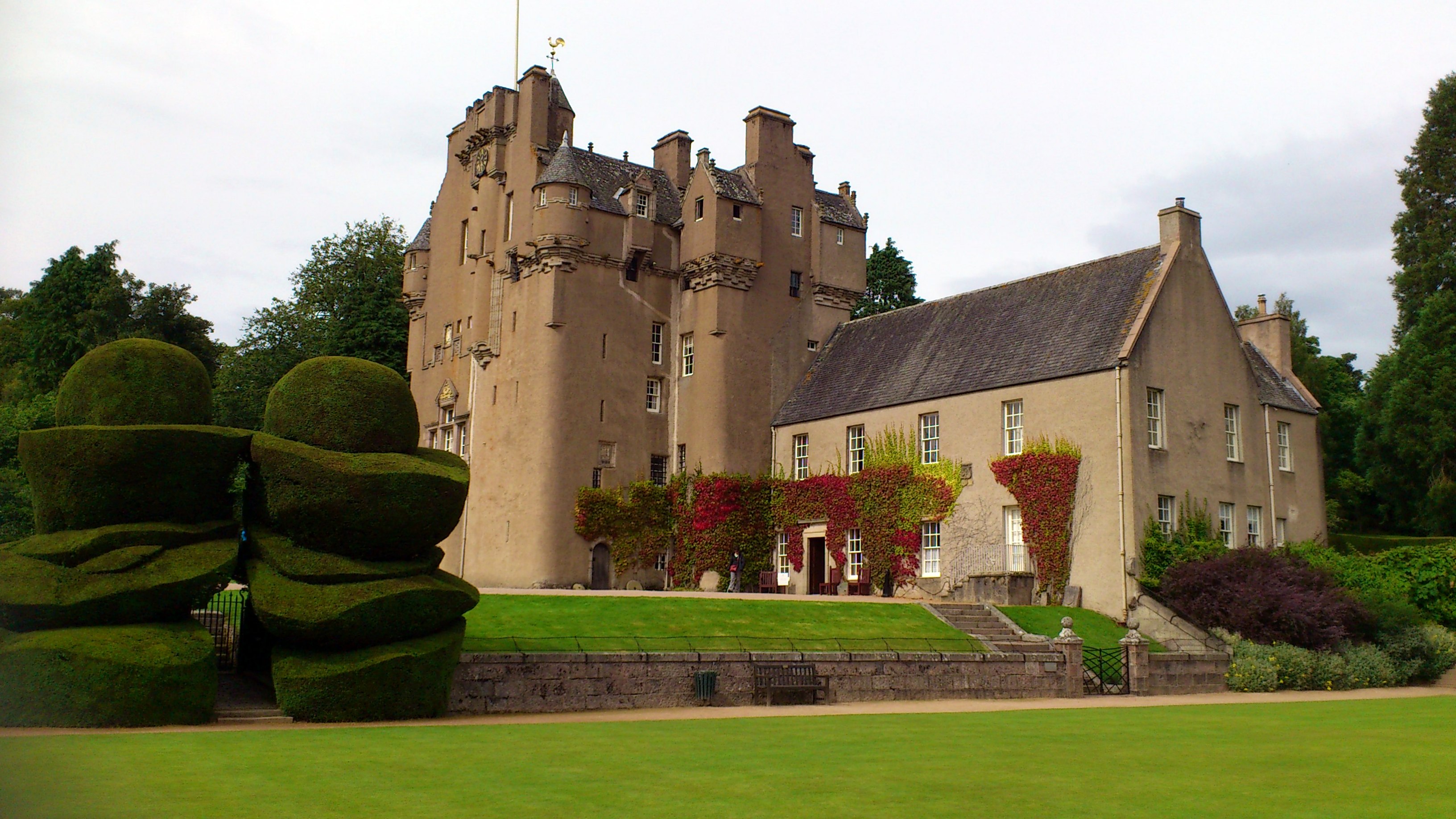
The Calders gave Cawdor its medieval foundation. A fortification licence dates from 1454, while the building contains earlier work. Historic Environment Scotland describes the central keep as mainly mid-fifteenth century, enclosed by later wings. The castle has been Category A listed since 1971.
Look across the frontage and several centuries come into view. Sixteenth-century north and west wings were substantially rebuilt between 1760 and 1774; nineteenth-century ranges completed more of the courtyard. Indoors, the listing records vaulted rooms, an iron yett or defensive gate, a kitchen well and richly worked fireplaces.
That mixture gives Cawdor its character. The great tower remains unmistakable, but generations have made a comfortable house around it. The drawbridge offers the theatrical arrival; the changing scale of the rooms and wings tells the longer domestic story.
Sources for this section · 1
02 / The literary connection
Macbeth’s title, centuries before this tower
Shakespeare makes Macbeth Thane of Cawdor, and those few words have followed the castle ever since. The familiar name can make it easy to picture Duncan’s murder happening here. In the play, however, that scene belongs to Macbeth’s castle at Inverness. VisitScotland’s Macbeth trail explicitly separates Cawdor Castle from the action of the tragedy.
The historical Macbeth died in 1057, centuries before this medieval building. Cawdor therefore cannot be presented as his surviving residence or the place where he killed Duncan. The association belongs to literature and the landscape that has grown around its telling.
It is still a rewarding connection. Arrive with Shakespeare in mind, then let the building introduce its own people. The Calders, Campbells and successive households have enough intrigue between them to keep a visitor occupied without borrowing the king’s bedchamber from the play.
Sources for this section · 1
03 / The founding legend
The donkey, the gold and the holly tree
Cawdor’s most unusual relic waits at the base of the tower: the remains of a tree around which the castle was built. In the estate’s telling, the Thane wanted a stronger home. A dream instructed him to load his treasure onto a donkey, let it wander and build wherever the animal settled for the night. It stopped beneath this tree.
The story makes the castle’s position feel chosen by something beyond its builder. The tree then becomes a promise of good fortune, preserved inside the very structure it supposedly determined. It is an unusually tangible centrepiece for a foundation legend: visitors can encounter the remnant that generations of storytellers have described.
The official history reports that microscopic examination identified holly, correcting the old description of hawthorn. It also gives an approximate radiocarbon date of AD 1372, without supplying the laboratory report. The wood’s reported age supports its antiquity; the dream and wandering donkey remain the founding tradition.
Sources for this section · 1
04 / An heiress in the family history
Muriel Calder and the Campbell inheritance
Muriel Calder is a historical person at the heart of Cawdor’s change of family. The heritage listing records her as the heiress and ward of the second Earl of Argyll. In 1510 she married his third son, Sir John Campbell of Muckairn.
A Nairn Museum account by Melissa Davies, published in the Spirit: Stories archive, adds the troubling circumstances: Muriel was abducted as a child and forced into the marriage. It says she lived until 1575, outlasting both her husband and son. That long life matters when reading the later haunting tradition; her story does not end with the wedding.
Dates and ages shift between popular retellings. For this guide, the marriage year follows Historic Environment Scotland. Muriel’s importance is clear even where individual details need care: her inheritance connected the Calder castle to the Campbell family whose name became bound to it.
05 / The haunting traditions
Blue velvet and a familiar family name
Davies records a local tradition of a woman in blue velvet seen around the grounds and identified as Muriel Calder. The account also places her in the drawing room, looking towards a portrait of the first Baron Cawdor. It is an evocative image: a figure from the family’s early history among the portraits of later generations.
Martin Coventry’s Castles of Scotland separately mentions a blue-dressed apparition and the ghost of John Campbell, first Lord Cawdor. His history dates the family’s barony to 1796. This later lord must therefore be distinguished from the Sir John whom Muriel married in 1510. Repeated names can blur several centuries into a single ghost story.
These publications preserve the traditions, but supply no dated witness interviews, recordings or investigation logs for the encounters. They leave us with reported appearances whose circumstances cannot yet be reconstructed. The blue velvet is memorable; identifying the figure, or explaining what witnesses encountered, remains an open question.
06 / Beyond the drawbridge
Three gardens, with woodland just beyond
Allow time outside. The official garden account describes three distinct spaces, each with its own history. The Flower Garden lies south of the castle; the older Walled Garden began as a kitchen garden and was remodelled in 1981. It now includes symbolic planting and a sculptural maze formed from more than 1,200 hollies.
Holly therefore appears twice in a visit: as the old remnant inside the tower and as living planting outside. A door in the Flower Garden wall leads into the Wild Garden beneath the Big Wood’s tall trees. Its collection includes Tibetan plants introduced in the 1960s. Moving between these spaces reveals how carefully cultivated grounds meet the wooded setting around the house.
Sources for this section · 1
07 / Planning a visit
Choose your season and check access
For 2026, the official season runs daily from 25 April to 4 October. The visitor page lists opening from 10am to 5pm, with last entry also shown as 5pm. Confirm the day’s admission arrangements before travelling and leave enough time for the castle and gardens. The address is Cawdor, Nairn, IV12 5RD.
Tickets are available online or on arrival, with separate options for the castle and grounds together or the gardens, grounds and nature trails. Check the current ticket details for the visit you want; future seasons may differ.
The castle warns of limitations inside for visitors with mobility difficulties. Much of the landscaped garden is accessible, with wide paths and benches, and accompanying carers receive free entry. Read the linked access statement and contact the castle about your particular needs before booking. These visitor details were checked on 15 September 2026.
Prepared for Scottish Paranormal / Haunted Scotland.
Sources and visitor information reviewed 15 September 2026.